This website is currently operating in test mode. Some features are unavailable or may not work as expected.

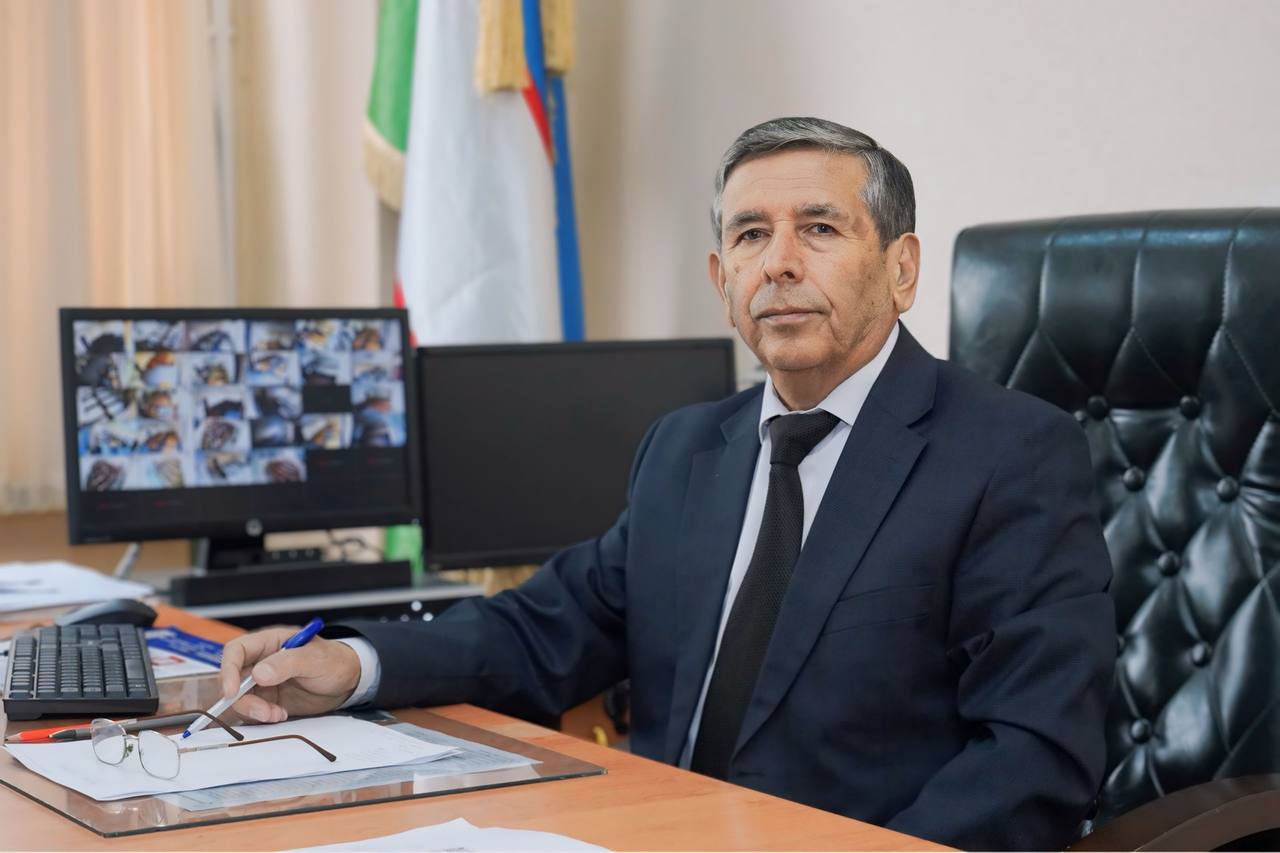
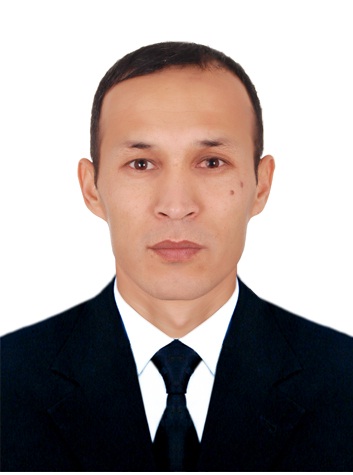
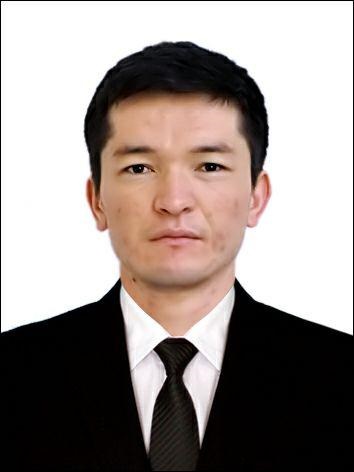
Head of the department

JABBAROV ZAFARJON ABDUKARIMOVICH

Kafedra mudiri

Degree:

Fan doktori, DSc

Scientific title:

Dotsent

Reception days:

Monday - Friday, 09:00 - 17:00

Address:

Address: 100174, Tashkent city, Almazor district, University street, 4th house

History of the department

     The purposeful study of the soils of Uzbekistan based on a clear plan and defined objectives is closely connected with the establishment of the National University of Uzbekistan (formerly Turkestan State University, Central Asian State University, and Tashkent State University). This is confirmed by the organization in 1920 of the Research Institute of Geobotany and Soil Science at the university.
      Between 1920 and 1932, under the leadership of the institute’s founder Professor N.A. Dimo and Professor M.A. Orlov, with the participation of researchers N.B. Bogdanovich, M.A. Pankov, D.M. Klavdienko and others, comprehensive studies were conducted on irrigated lands of Uzbekistan, Tajikistan, Kyrgyzstan and Turkmenistan. Soil maps for various purposes were compiled, and major soil types distributed across these territories were given detailed comprehensive characteristics. These maps and scientific materials became the foundation for the development of agriculture and the formation of a scientifically grounded planned farming system.
       The establishment of the Department of Soil Science in 1935 within the Faculty of Geology and Geography demonstrated that soil research in Uzbekistan had become a major scientific field of national importance. In 1949, the department was transferred to the Faculty of Biology, and in the same year the Department of Agronomy was established, after which the faculty was renamed the Faculty of Biology and Soil Science.
During this period, significant research work was carried out by the academic staff. Professor M.A. Orlov is regarded as the founder of the Department of Soil Science; his scientific activity was devoted to the study of the genesis and properties of anthropogenic (oasis) soils formed under the influence of irrigation and agricultural activity. Academician S.N. Ryzhov and later Associate Professor Kh.A. Abdullaev focused their research on the cultural state of irrigated lands, the role of humus in improving fertility, and the management of humus content.
      In the 1960s–1970s, the department staff (B.D. Mikhailov, K. Gofurov, L. Tursunov, V. Sayfutdinova, L. Salkova, N. Kavkhoyans and others) conducted complex studies in the middle and lower reaches of the Zarafshan Valley, including Kattakurgan, Khatyrchi, the Zirabulak and Karnab deserts, as well as the soils of the Bukhara and Karakul oases. Hundreds of soil, soil-erosion and soil-reclamation maps (scales 1:10,000 and 1:25,000) were produced and transferred for practical use. Based on these studies, K. Gofurov, L. Tursunov, N. Yakubov, A. Niyozov and A. Abdiev defended their PhD dissertations. Important research was also conducted under the supervision of Associate Professors V. Valiev and L. Tursunov on rainfed lands of the Chirakchi district in Kashkadarya region.
Since 1980, under the leadership of Associate Professor Kh. Abdullaev, soils of the Chatkal Range were studied (on the example of the Chatkal Biosphere Reserve); under Associate Professor L. Tursunov, soils of the Turkestan Range were investigated (Zaamin National Park and Reserve). Later, soils of the Hissar and Nurata mountain systems were studied. As a result, regularities of soil formation and properties of all mountain soil types were identified, soil erosion maps were compiled, and A. Nazarov, M. Fakhrutdinova, S. Yusupov and Kh. Kungirov defended their PhD dissertations.
The department also focused on the influence of agricultural activity on soil genesis and evolution. Under the supervision of Associate Professor Kh. Abdullaev, lecturer Abdrahmonov comprehensively studied gray-brown soils and defended his PhD thesis. V.U. Sayfutdinova, under the guidance of Academician S.N. Ryzhov, studied the restoration (evolution) of rainfed soils over long periods and defended her PhD thesis. D. Kamilova investigated changes in soil properties under different agro-backgrounds and also defended her PhD thesis.
      From 1961 to 1967, the Department of Agrochemistry was headed by Professor N.P. Malinkin, Doctor of Agricultural Sciences, whose contribution to the development of cotton fertilization systems was highly significant. These scholars trained many researchers and laid the foundations for their own scientific schools.
From 1968 to 1995, the department was headed by Professor Jurakul Sattarovich Sattarov, Doctor of Agricultural Sciences, Academician of the Academy of Sciences of Uzbekistan, member of the New York Academy of Sciences, member of the International Academy of Informatization, Honored Worker of Agriculture of Uzbekistan, member of the International Union of Soil Sciences and the World Fertilizer Center.
Since December 1, 2018, the Departments of Soil Science and Agrochemistry were merged into the Department of Soil Science. Currently, the department employs 1 академician, 5 Doctors of Science and 9 PhD holders.

Heads of the Department:

  • 1935–1962 – Prof. M.A. Orlov
  • 1962–1968 – Academician S.N. Ryzhov
  • 1968–1981 – Assoc. Prof. Kh.A. Abdullaev
  • 1981–1986 – Assoc. Prof. V.U. Sayfutdinova
  • 1986–2008 – Prof. L. Tursunov
  • 2008–2011 – Assoc. Prof. M. Fakhrutdinova
  • 2011–2014 – Assoc. Prof. T. Abdrahmonov
  • 2014–2015 – Assoc. Prof. Z. Khaidmukhamedova
  • 2015 – Assoc. Prof. S. Sidikov
  • Since 2020 – Prof. Z. Jabbarov

The composition of the department

Djalilova Gulnora Tulkunovna

Professor

More

Abdraxmanov Toxtasin Xxx

Professor

More

Kenjayev Yunus Chintoshevich

Professor

More

Gafurova Lazizaxon Akramovna

Professor

More

Sidikov Saidjon Xxx

Professor

More

Sattarov Djurakul Xxx

Professor

More

Zakirova Salomat Qasimbayevna

Dotsent

More

Mahammadiyev Samad Qilichevich

Dotsent

More

Abdushukurova Zamira Zaynitdinovna

Dotsent

More

Ergasheva Olimaxon Xaliqjonovna

Dotsent

More

Maxkamova Dilafruz Yuldashevna

Dotsent

More

Nabiyeva Gulchexra Mirergashevna

Dotsent

More

Isxakova Shoira Mirsadikovna

Dotsent

More

Faxrutdinova Mashkura Fazliddinovna

Dotsent

More

Aliboyeva Malika Alimovna

Katta o‘qituvchi

More

Atoyeva Gulhayo Raxmonovna

Katta o‘qituvchi

More
KASIMOV UMEDILLO SALIMOVICH

Kasimov Umedillo Salimovich

Katta o‘qituvchi

More

Abdullayev Shohruh Zafar o‘g‘li

Assistent

More

Scientific activity

The department actively applies ICT and innovative technologies in education, participates in international and national grants, and has produced nearly 100 grants and contracts. Research outputs include dozens of monographs, textbooks, and hundreds of scientific publications. 

Monographs

  1. Ruzmetov M.I., Jabbarov O.A., Kuziev R.K., Abdullaev S.A., Jabbarov Z.A.
    Meliorative Status of Irrigated Lands of Uzbekistan and Ways of Their Improvement.
    Tashkent: “Universitet” Publishing House, 2018. 305 p.
  2. Jabbarov A. Technogenic Degradation of Soils and Their Reclamation.
    Tashkent: “Universitet” Publishing House, 2020. 109 p.
  3. Abdullaev S., Jabbarov Z.A., Zakirova S.K., Rakhmatov Z., Tursunkulova A., Islomova Z.
    Impact of the Kattakurgan Reservoir on the Ecological and Meliorative State of Surrounding Soil Cover and Measures for Its Improvement.
    Tashkent: “Universitet” Publishing House, 2020. 100 p.
  4. Jabbarov Z.A., Jabbarov B. Reclamation of Technogenically Disturbed Soils.
    Tashkent: “Universitet” Publishing House, 2022. 141 p.
  5. Jabbarov Z.A., Atoeva G. Changes in Fertility Indicators of Soils Contaminated with Household Waste. Tashkent: “Universitet” Publishing House, 2023. 125 p.
  6. World Reference Base for Soil Resources. International Soil Classification System for Soil Description and for Creating Soil Map Legends. Scientific editors of the translation: Z.A. Jabbarov, G.T. Djalilova, L.A. Gafurova, T. Abdraxmanov, D.Yu. Maxkamova. 4th edition. National University of Uzbekistan. Tashkent: “Ma’rifat”, 2025. 242 p. ISBN: 978-9910-709-09-8
  7. Jabbarov Z., Abdraxmanov T., Suska M. Malavska, Vilkomirskiy B., Abdurahmonov N., Jabborova D., Adilov B., Djalilova G., Mahammadiyev S., Zakirova S., Maxkamova D., Nomozov O‘., Idirisov K., Abdullayev Sh., Imomov O., Rahmatullayeva G., Yoqubov E.Sh. Studies on the Dried Bed of the Aral Sea (Vol. 1: Properties of Soil Grounds in the Eastern Part and Possibilities for Vegetation Establishment).
    Tashkent: “Innovative Development Publishing and Printing House”, 2025. 308 p.
  8. Jabbarov Z., Abdraxmanov T., Jakub Kostecki, Nan Xu, Djalilova G., Mahammadiev S., Mahkamova D., Nomozov O‘., Xoldorov Sh., Abdullaev Sh., Imomov O., Abdukarimov J.
    Studies in the Area Surrounding the Kattakurgan Reservoir: Ecological and Meliorative Condition of Soils and Their Cartographic Models.
    Tashkent: “Innovative Development Publishing and Printing House”, 2026. 424 p.
  9. Djalilova G. Impact of Erosion Processes on Soil Properties in the Sukoksay Basin: Analysis and Mapping Based on GIS Technologies.
    Tashkent: Umid Design, 2025. 156 p. ISBN: 978-9910-696-59-6
  10. Djalilova G. Geoinformation Analysis of Erosion Processes in the Mid-Mountain and Low-Mountain Regions of Uzbekistan (Case Study of Soils of the Chatkal and Turkestan Ranges). Tashkent: Umid Design, 2024. 228 p.
  11. Abdullaev S., Sidikov S., Abdushukurova Z., Rakhmatov Z. Changes in the Soils of the Jizzakh Steppe under Conditions of Intensively Developed Agriculture and Ways to Improve Their Fertility. Tashkent: Universitet Publishing House, 2019.
  12. Sattarov J., Sidikov S. Ways to Increase the Efficiency of Mineral Fertilizers.
    Tashkent: Universitet Publishing House, 2018. 40 p.


Textbooks

  1. Gafurova L., Jabbarov Z.A., Turapov I.T., Saidova M.E. Soil Degradation.
    Tashkent: “Mumtoz So‘z” Publishing House, 2019. 276 p. Textbook. ISBN 978-9943-5561-8-8.
  2. Yuldashev G., Abdrahmonov T., Jabbarov Z.A. Soil Chemistry.
    Tashkent: “VNESHINVESTPROM” Publishing House, 2019. 248 p. Textbook. ISBN 978-9943-4235-1-4.
  3. Jabbarov Z.A. Soil Reclamation. Tashkent: “Universitet” Publishing House, 2021. 136 p. Textbook.
  4. Jabbarov Z.A., Abdurakhmanova G., Jurayeva U., Jabborov B. Soil Biology and Ecology.
    Tashkent: “Universitet” Publishing House, 2021. 280 p. Textbook.
  5. Sidikov S., Jabbarov Z.A., Idrisov Kh.A., Gaziev M.A., Mahkamova D.Yu.
    General Tashkent: Umid Design Publishing House, 2024. 300 p. Textbook.
  6. Abdrahmonov T., Yuldashev G., Tursunov Kh.Kh., Jabbarov Z.A., Isagaliev M., Isakov V.Yu., Djalilova G., Mahkamova D.Yu., Fakhrutdinova M.F., Iskhokova Sh.M.
    Soil Science. Tashkent: “Ma’rifat” Publishing House, 2024. 468 p. Textbook.
  7. Gafurova L.A., Alyabina I.A., Nabieva G.M., Djalilova G.T., Mambetnazarov V.S.
    GIS Technologies in Soil Science. Moscow: Max Press, 2019. 184 p. Textbook. ISBN 978-5-317-06097-8.
  8. Gafurova L.A., Alyabina I.A., Nabieva G.M., Djalilova G.T., Mambetnazarov V.S. GIS Technologies in Soil Science. Tashkent: “Vneshinvestprom” Publishing House, 2019. 218 p. Textbook. ISBN 978-9943-4885-4-0.
  9. Pankova E.I., Molodtsov V.A., Yamnova I.A., Gafurova L.A., Golovanov D.L., Mazikov V.M., Blagovolin N.S., Isaev V.A., Solovyov D.A., Djalilova G.T., Mahkamova D.Yu.
    Salinity and Gypsum Content Features of Soils in the Jizzakh Steppe (Before Large-Scale Land Reclamation in the 1970s). Moscow: Media-Press, 2023. 264 p. Monograph.
  10. Maxkamova D.Yu. Low-Fertility and Poor-Reclamation Gypsiferous Soils and Their Biological Activity (A Case Study of Zarbdor District, Jizzakh Region).
    Tashkent, 2024. 125 p. Monograph.
  11. Sidikov S., Kenjayev Yu., Mazirov M. General Agriculture.
    Tashkent: UMID DESIGN Publishing House, 2022. 288 p.
  12. Sattarov J., Sidikov S., Mahammadiyev S. Moisture, Soil and Fertilizers.
    Tashkent: “Universitet” Publishing House, 2022. 268 p.
  13. Sidikov S. General Agriculture. Tashkent: UMID DESIGN Publishing House, 2023. 312 p.
  14. Sidikov S. Soil Solution as a Source of Plant Nutrition. Tashkent: UMID DESIGN Publishing House, 2023. 112 p. Monograph.
  15. Sattarov J.S., Kenjayev Yu.Ch., Sidikov S., Mahammadiyev S.Q., Kasimov U.S.
    Physiological Basis of Mineral Nutrition of Plants. Tashkent: Universitet Publishing House, 2022. 412 p.


Grants

To date, the Department of Soil Science has implemented approximately 100 international and national grants and contractual projects, the results of which have been introduced and applied in relevant sectors. Recent grants include:

  • Erasmus Mundus (CACE/22/10 194139-EM-1-2010-1 NL-ERA MUNDUS-EMA21) – International project “Central Asia Student International Academic Exchange with the European Union (CASIA)”, Project Secretary, 2011–2016.
  • Erasmus Mundus (545730-EM-1-2013-1-NL-ERAMUNDUS-EMA21) – International project “Training of Individuals through Mobility from the Republic of Uzbekistan to International Academic Exchange with the European Union (TIMUR)”, 2014–2018.
  • NURSLING-561742-EPP-1-2015-PT-EPPKA2-CBHE-SP – International project “National Qualifications System: Guidelines for the Development and Recognition of Qualifications”, 2015–2018.
  • DAAD Exceed – “SDG Nexus Network” – International project, 2022.
  • Uzb-Ind-2021–93 – Joint Uzbekistan–India research project “A New Bioinoculant Based on Biochar and Rhizobacteria for the Production of Healthy Food in Stress Agroecosystems”, 2021–2023.
  • World Bank Project #REP-24112021/54 – International project “Frontiers in Legume Cropping Systems in Uzbekistan: Exploiting Beneficial Microbes for Stable and Resource-Efficient Production (FLegUZB)”.
  • OT-A-KH-2018-399 – Applied project “Impact of the Kattakurgan Reservoir on the Ecological and Meliorative State of Soils in Adjacent Territories and Development of Measures for Their Improvement”, 2018–2020.
  • IL 632204138 – Innovation project “Improving Soil Properties on the Dried Bed of the Aral Sea through the Introduction of Biopreparations and the Use of Mineralized Collector–Drainage Water for Growing Pasture Crops with the Selection of Salt-Tolerant Species”.
  • FL-8323102111 – Fundamental project “Developing the Scientific Basis for Zoning Planting Areas According to Salinity Levels and Physical, Chemical and Biological Properties of Soils of the Dried Bed of the Aral Sea”, 2024–2027.
  • IL-9224094166 – Innovation project “Development of Cartographic Models of the Ecological and Meliorative State of Soils around the Kattakurgan Reservoir”, 2025–2026.
  • Erasmus+ Programme – “Key Action 1: Learning Mobility for Higher Education Students and Staff”, international project, 2025–2027.


Currently, the Department of Soil Science provides training for:

  • Bachelor’s degree students in the field of 60810200 – Agrochemistry and Soil Science;
  • Master’s degree students in the specialty of 70810203 – Soil Science.

The following disciplines are taught within these programs.

0810200 – Bachelor’s Program: Agrochemistry and Soil Science

No. Course Title Brief Description
2 Botany, Plant Physiology and Biochemistry A discipline studying plant cell structure, tissues, morphology of vegetative and generative organs, anatomical structure, lower and higher plants, their taxonomy (families, genera, species), distribution patterns in nature, and the role of plants in natural ecosystems.
4 General Agriculture and Crop Production Covers the history and scientific foundations of agriculture and crop production; weeds and weed control; crop rotations; soil tillage; seed production and sowing; farming systems and environmental issues. Also studies cultivated plants, their origin, classification, biological characteristics, varieties, modern cultivation technologies, and agrotechnical practices.
5 Soil Science Introduces scientific foundations and history of soil science, origin and structure of soil cover, composition and properties, geographical distribution patterns, functions and significance of soils, fertility issues, and soil-forming processes studied under field and laboratory conditions.
6 Soil Physics Focuses on physical, water-physical, and physico-mechanical properties of soils, and on solving key problems related to soil water and thermal regimes and aeration.
7 Plant Nutrition and Fertilizers Studies interactions within the “plant–soil–fertilizer” system, types and composition of fertilizers, methods of production and application, essential nutrients and their roles in plant growth, and fertilizer classification.
9 Soil Geography Aims to study patterns of geographical distribution of soils based on international experience; characteristics of soils of Uzbekistan and the world; soils of different soil-climatic zones; land resources and their rational use and protection.
10 Soil Chemistry Examines chemical properties and composition of soils, soil solution, adsorption capacity, nutrient elements and their migration, organic matter and humus status, and modern technologies in soil chemistry. Provides both theoretical and practical competencies.
11 Fundamentals of Land Cadastre and Soil Bonitation Introduces the natural origin of soils and their fertility, the role of soil as the main means of agricultural production, and theoretical and practical issues of soil evaluation and quality assessment.
12 Soil Reclamation and Hydrology Provides modern understanding of soil reclamation and hydrology, including fertility improvement, regulation of water, air and nutrient regimes, erosion control, desalinization of saline soils, and reclamation of waterlogged, sandy and stony lands.
13 Soil and Environmental Pollution Develops knowledge and skills on soil contamination by industrial wastes, their impact on soil properties, emerging environmental problems, and methods for mitigation.
14 Soil and Landscape Degradation Studies types and drivers of soil degradation, landscape restoration and conservation, prevention and mitigation of degradation processes, soil and land assessment, and legal aspects of agricultural land protection.
15 GIS Technologies in Soil Science Develops competencies in the application of Geographic Information Systems (GIS) in soil research and practice.
16 Agrochemical Soil Mapping Provides knowledge on the scientific basis and history of soil mapping, field surveys, development of soil maps, and creation of agrochemical cartograms showing available nutrient content.
17 Resource-Saving Technologies in Soil Science Introduces resource-efficient technologies applied in Uzbekistan and their role in improving soil fertility, addressing current scientific and practical challenges.
18 Agrochemical Characteristics of Soils of Uzbekistan Provides knowledge about soil types in Uzbekistan, their fertility, properties, humus and nutrient supply, and measures for improving soil fertility.
19 Modern Methods and Equipment in Agrochemistry and Soil Science Introduces modern analytical methods and laboratory equipment used in agrochemical and soil analyses.
20 History and Methodology of Agrochemistry Studies the historical development of agrochemistry and modern research methodologies in the field.
21 Agricultural Biotechnology Introduces the principles of biotechnology and its role in improving soil fertility, with a focus on current applications.
22 Soil Organic Matter Focuses on modern knowledge about soil organic matter status and methods for its enhancement.
23 Computer Technologies in Agrochemistry and Soil Science Covers digitalization and the application of computer technologies in professional activities as a modern requirement.
24 Soil Mapping Provides knowledge on scientific principles and history of soil mapping, territory surveys, soil map compilation, and modern approaches to agrochemical cartogram development.
25 Mountain Soils Studies the concept of mountain soils, soils of Uzbekistan’s mountain regions, their distribution, morphology, properties, specific features, and conservation issues.
26 Soil Erosion and Conservation Examines erosion processes, causes and impacts on soil morphology, composition and fertility, distribution patterns, and development of skills for applying anti-erosion measures.
27 Biological Activity of Soils Introduces modern methods and theoretical bases for assessing biological activity; studies the role of microorganisms and enzymes in soil ecological assessment and bioindication.
29 Fertilization of Agricultural Crops Provides up-to-date knowledge on methods, technologies and timing of fertilizer application for agricultural crops.
30 Mathematical Modeling in Soil Science Provides knowledge on modeling approaches in soil science, data processing and conducting model-based experiments.
31 Smart Farming Systems and Soil Properties Introduces concepts of smart (digital) agriculture and the relationship between technological approaches and soil properties.

70810203 – Master’s Program: Soil Science

No. Course Title Brief Description
1 Soil Reclamation Studies soil disturbance and contamination, changes in soil properties and regimes, appropriate reclamation measures, scientific approaches and agrobiological methods for restoration.
3 Biological Diagnosis of Soils Examines biological soil properties including microbial activity, enzymatic activity, soil respiration, and overall biological activity, and assesses fertility and degradation processes based on these indicators.
4 Teaching Methodology of Specialized Disciplines Covers theoretical foundations, principles, methods and forms of effective teaching in professional education; lesson planning, organization of the learning process, application of modern pedagogical technologies, development of professional competencies, assessment of knowledge and skills, and integration of education with practice.
5 Research Methods in Soil Science Addresses theoretical foundations and practical methods of scientific research in soil studies, including field and laboratory work organization, soil sampling, physicochemical and biological analyses, experimental design, statistical data processing, and formulation of conclusions.
6 Anthropogenic Soils Studies the origin, composition, properties and distribution patterns of soils formed or transformed by human activities; impacts of industry, agriculture, construction and urbanization; types of pollution and degradation and their environmental consequences; methods of improving meliorative conditions, reclamation and sustainable use.
7 Soil Monitoring Focuses on scientific principles of systematic observation, assessment and forecasting of soil conditions; methods for detecting temporal changes in fertility, salinity, erosion, pollution, water regime and other indicators; collection, analysis and mapping of monitoring data to prevent degradation and to develop recommendations for rational land use.
8 Research Methodology Examines theoretical foundations of scientific inquiry, research principles and methods; identification of scientific problems, formulation of objectives and hypotheses, research design, data collection and analysis; academic writing and preparation of articles, theses and reports.
9 Theoretical and Practical Foundations of Digital Soil Mapping Covers methods for predicting and mapping soil properties and types using modern information technologies; application of GIS and remote sensing data; statistical and geostatistical modeling; processing of field and laboratory data in digital environments; development of high-accuracy soil maps and their applications in land management, agricultural planning and environmental assessment.
10 Fundamentals of Modeling in Soil Science Studies physical, chemical and biological soil processes using mathematical and computer models; analysis, evaluation and prediction of soil properties; modeling of fertility and degradation processes; development of practical modeling skills.
11 Biochemical Basis of Humus Formation Examines biochemical decomposition of organic residues by microorganisms and enzymes, processes of resynthesis and polymerization; mechanisms of formation of humic substances (humins, humates, fulvic acids), their molecular structure, energetic and ecological significance, and their role in soil fertility and sustainability.
12 Contemporary Concepts and Problems of Soil Science Addresses modern scientific views on soil as a complex biogeochemical system and key issues such as soil degradation, climate change, fertility conservation and sustainable soil management.
13 Innovative Technologies for Enhancing Soil Fertility Studies bio- and agrotechnologies aimed at optimizing physical, chemical and biological soil properties, including digital modeling, precision agriculture, biostimulants, microbial preparations and resource-saving methods; evaluates their effectiveness for sustainable fertility improvement and stability of agroecosystems.


Researchers and Scientific Works

No. Full Name Academic Degree and Title Dissertation Topic
1 Jabbarov Zafarjon Abdukarimovich Doctor of Biological Sciences, Professor Chemical pollution of soils and their reclamation
2 Sattarov Jurakul Sattarovich Doctor of Agricultural Sciences, Professor Fundamental problems of agrochemistry
3 Gafurova Laziza Akramovna Doctor of Biological Sciences, Professor Fundamental problems of soil science
4 Fakhrutdinova Mashkura Fazlitdinovna Candidate of Biological Sciences, Associate Professor Soils of the northern part of the Turkestan Range (case study of Zaamin National Park soils)
5 Djalilova Gulnora Tulkunovna Doctor of Biological Sciences, Professor Geoinformation analysis of erosion processes in mid- and low-mountain regions of Uzbekistan (case study of Chatkal and Turkestan Range soils)
6 Mahkamova Dilafruz Yulchievna PhD in Biological Sciences, Associate Professor Gypsiferous soils of the Jizzakh Desert and their biological activity
7 Mahammadiyev Samad Qilichevich PhD in Agricultural Sciences, Associate Professor The role of cultivar and fertilizers in improving grain quality of winter wheat
8 Abdushukurova Zamira Zainitdinovna PhD in Agricultural Sciences, Associate Professor Agrophysical properties and salt regime of irrigated gray-meadow soils (case study of the northwestern Jizzakh Desert)
9 Zakirova Salomat Kasimbaevna PhD in Agricultural Sciences, Associate Professor Changes in takyr and takyr-meadow soils of the lower Kashkadarya under anthropogenic impact
10 Iskhakova Shoira Mirsodikovna Candidate of Biological Sciences, Associate Professor Material composition of soils in the lower Amu Darya and the impact of irrigation and desertification
11 Sidikov Saidjon Candidate of Agricultural Sciences, Professor Dependence of humus composition and content in irrigated soils on agrotechnical background and plant residues
12 Ergasheva Olimakhon Khalikjanovna PhD in Biological Sciences, Associate Professor Pedofauna of the Northern Turkestan Range and the role of biodiagnostics of eroded soils
13 Nabieva Gulchehra Mirergashevna Doctor of Biological Sciences, Associate Professor Degraded pasture soils and improvement of technologies for increasing their fertility
14 Kasymov Umedillo Salimovich PhD in Agricultural Sciences Methods to improve the efficiency of mineral fertilizers (case study: cotton on irrigated typical sierozems)
15 Atoeva Gulhayo Rakhmonovna PhD in Biological Sciences Soil pollution around municipal solid waste landfills
17 Aliboeva Malika Alimovna PhD in Biological Sciences Ecology of mountain soils
18 Abdullaev Shokhrukh Zafar ugli Drying of the Aral Sea and soil formation


International cooperation

The Department of Soil Science has established active cooperation with national and international partners at a high professional level. Scientific, practical and innovative collaboration is maintained with leading institutions and organizations of Uzbekistan, including:

  • Institute of Soil Science and Agrochemical Research
  • State Unitary Enterprise “TUPROQSIFATTAHLIL”
  • Fergana State University
  • Termez State University
  • Andijan State University
  • Gulistan State University
  • Karshi State University
  • Bukhara State University
  • Urgench State University
  • Samarkand State University
  • Karakalpak State University
  • Agrarian State University
  • JV LLC “IFODA AGRO KIMYO HIMOYA”
  • Republican Agrochemical Station
  • Botanical Garden
  • and other organizations.

International cooperation is carried out with partners from Poland, Czech Republic, Germany, Slovakia, Slovenia, China, Russia, USA, India, Japan, Kazakhstan, Kyrgyzstan, Tajikistan, the Netherlands, and other countries.