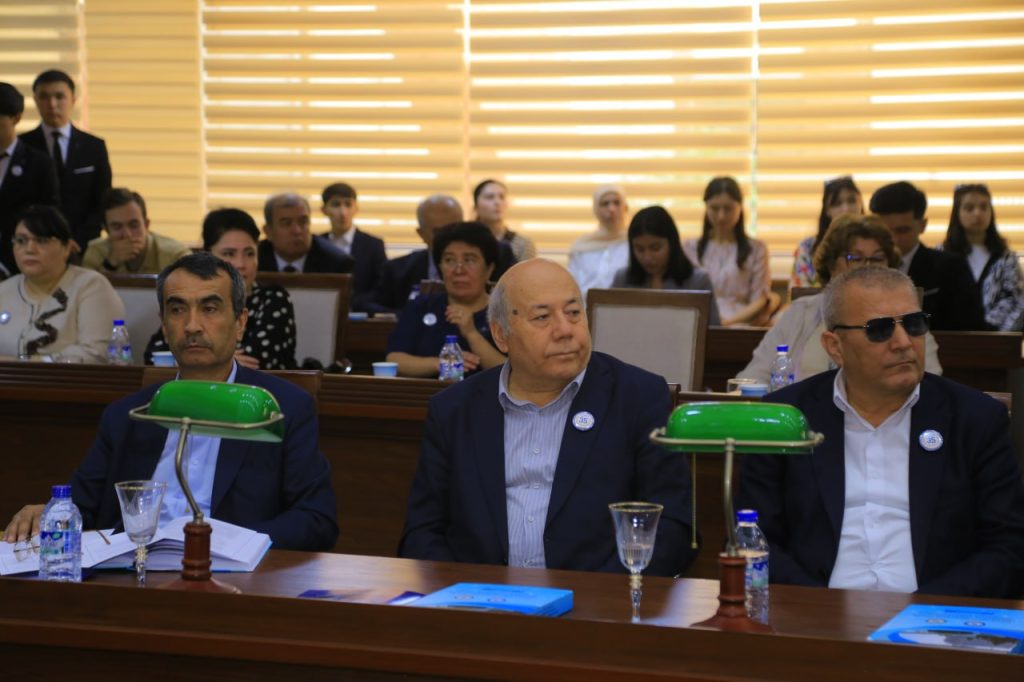
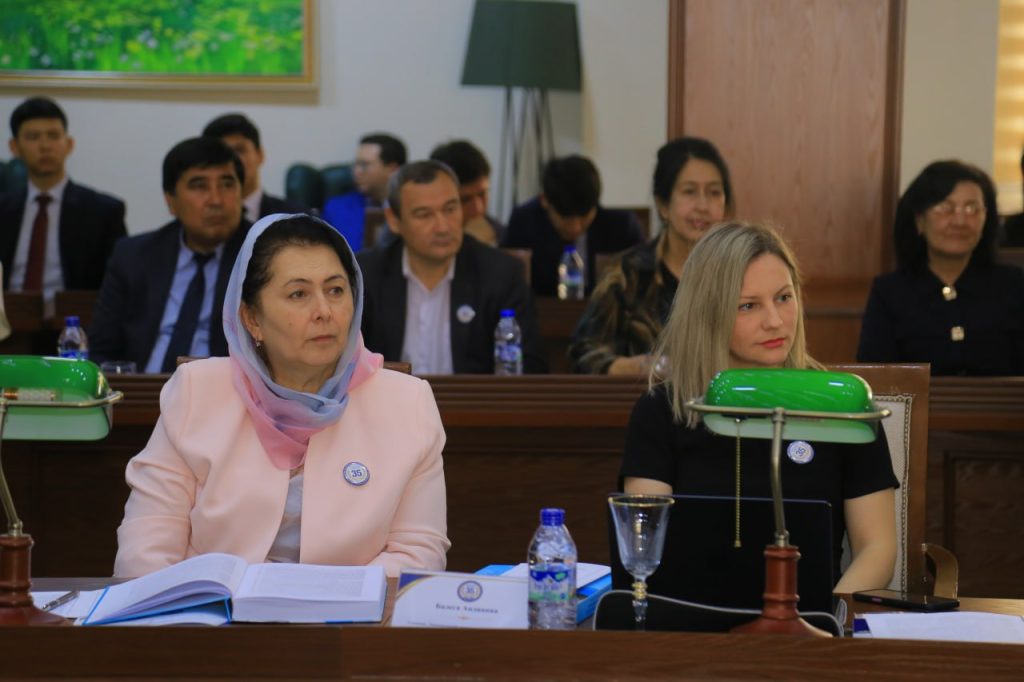
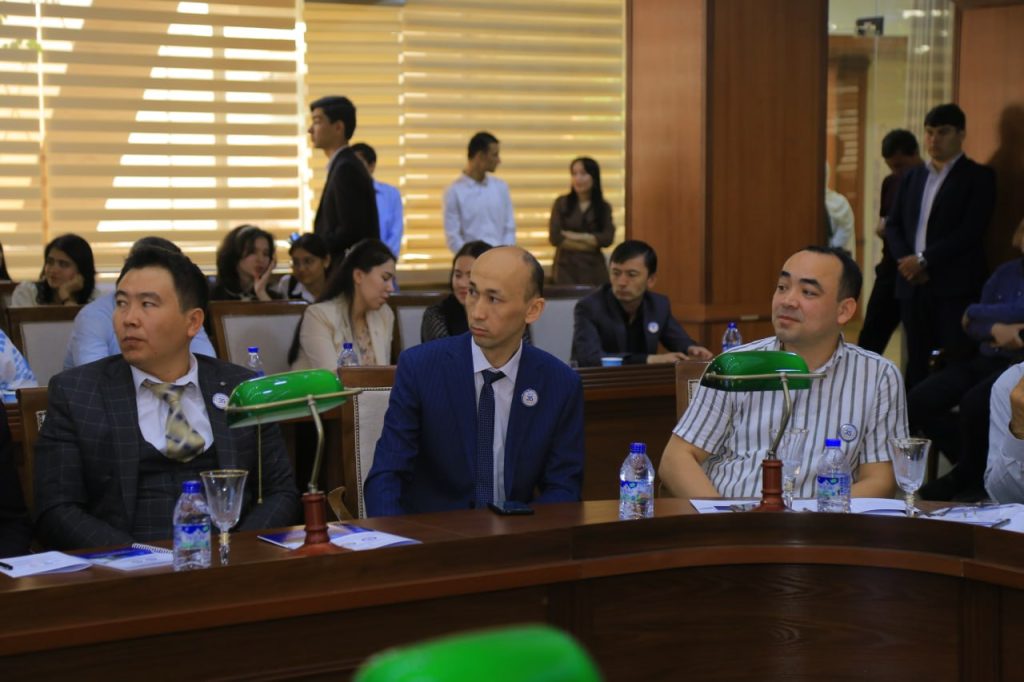
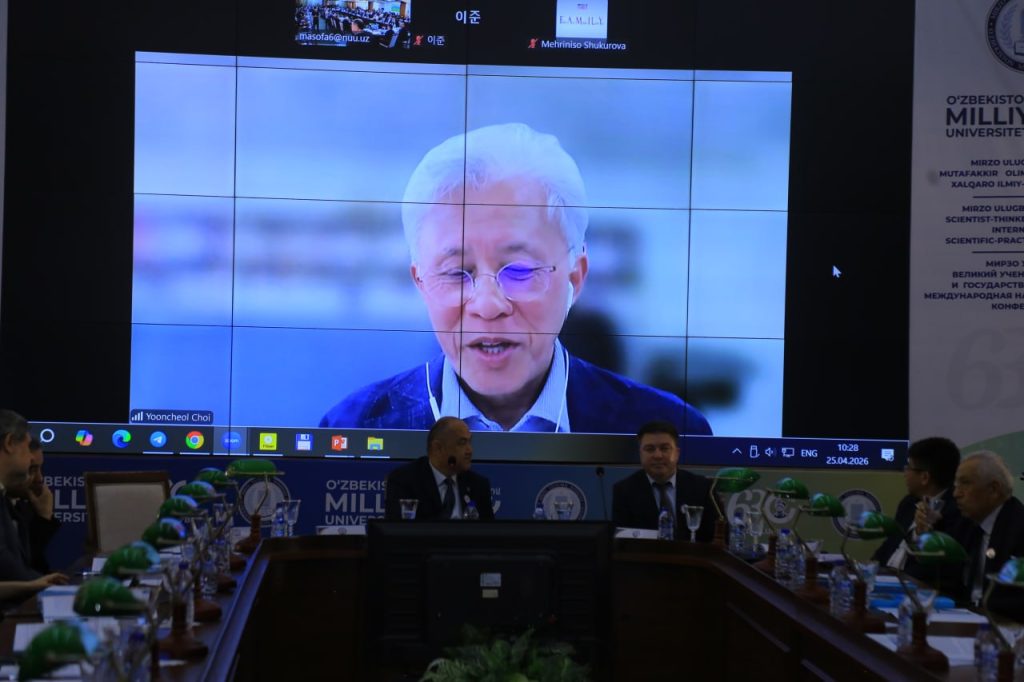
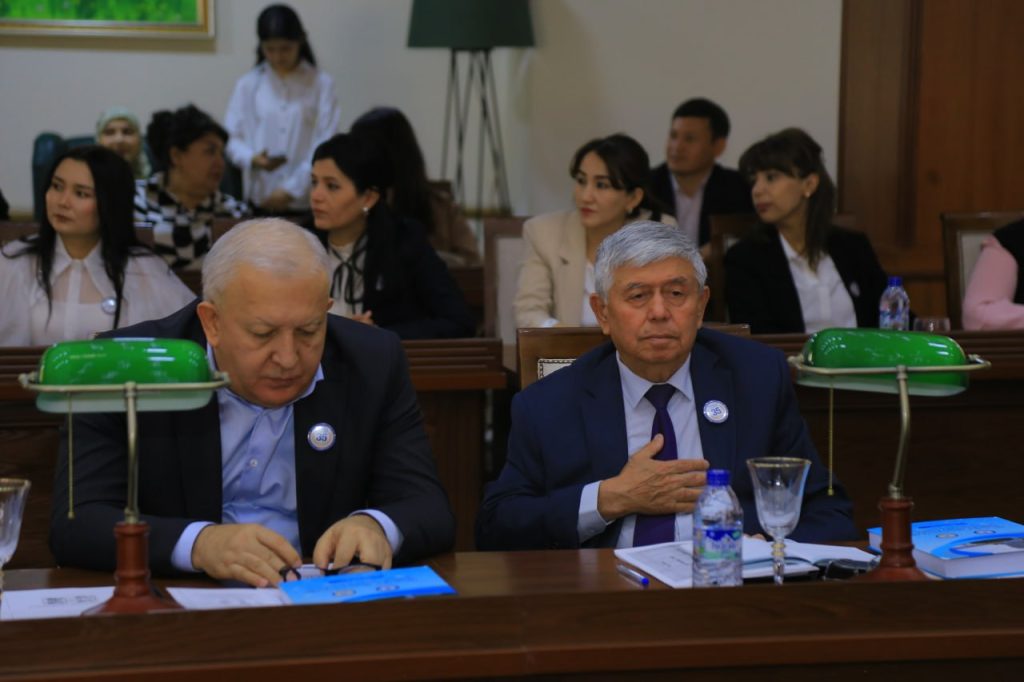
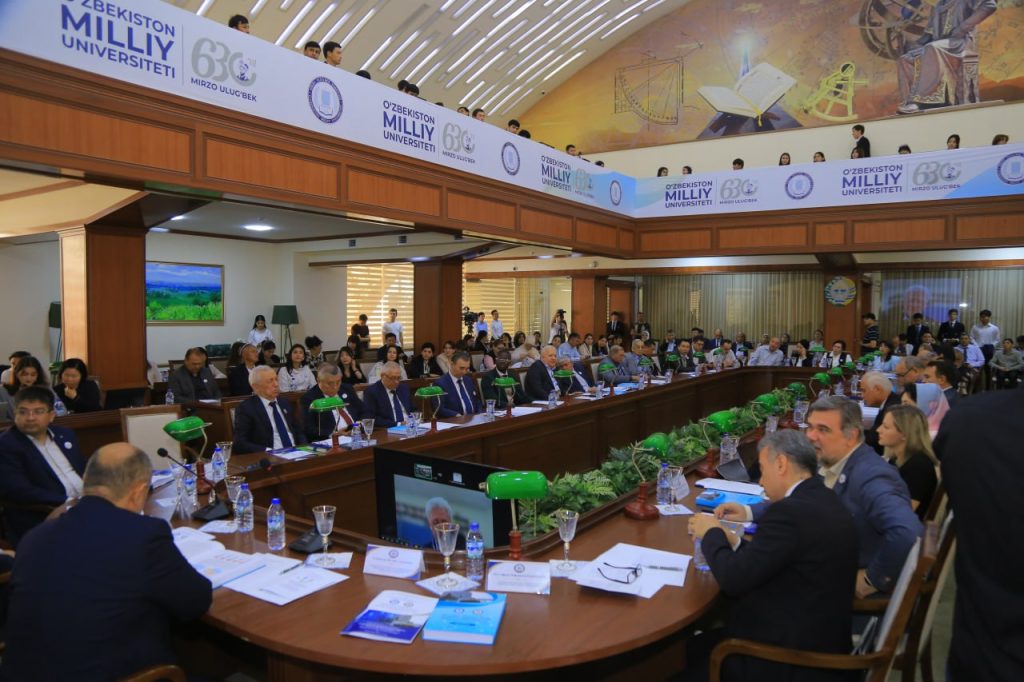
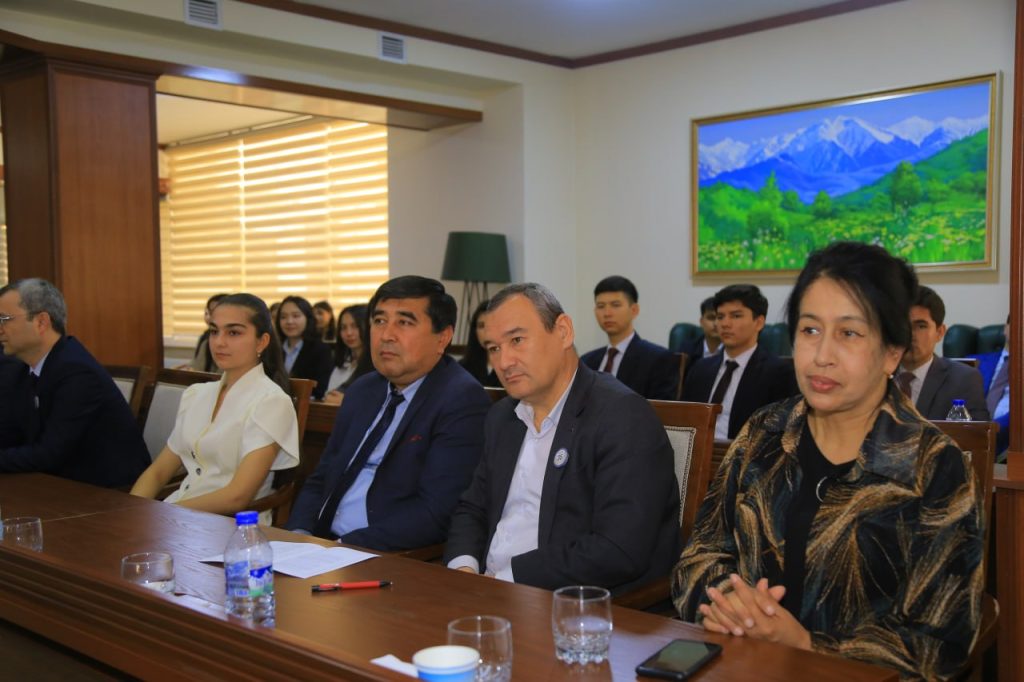
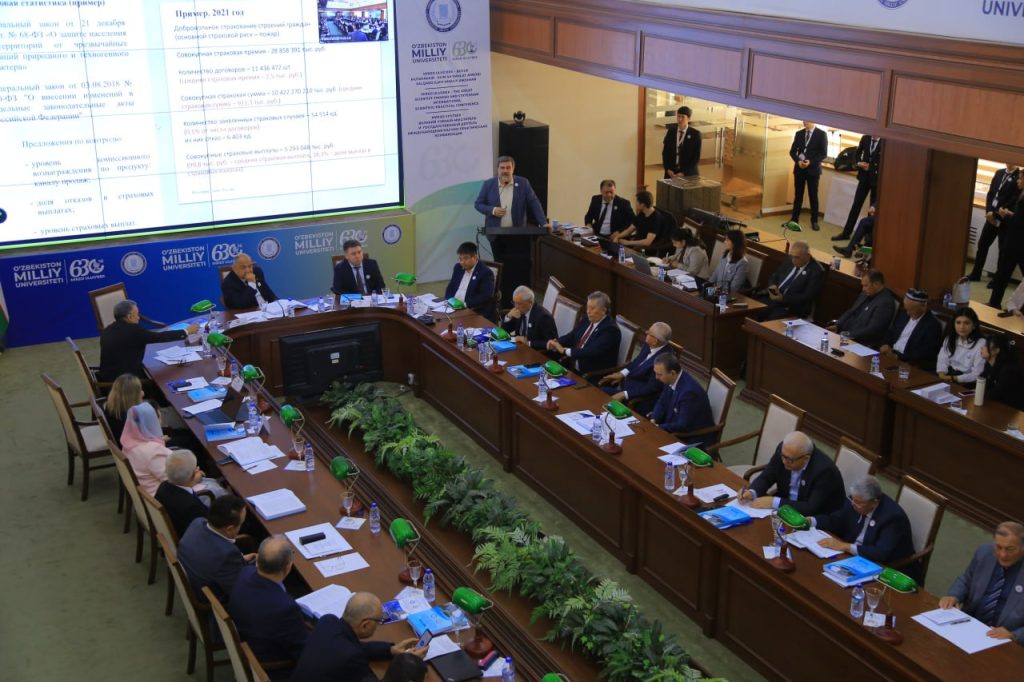
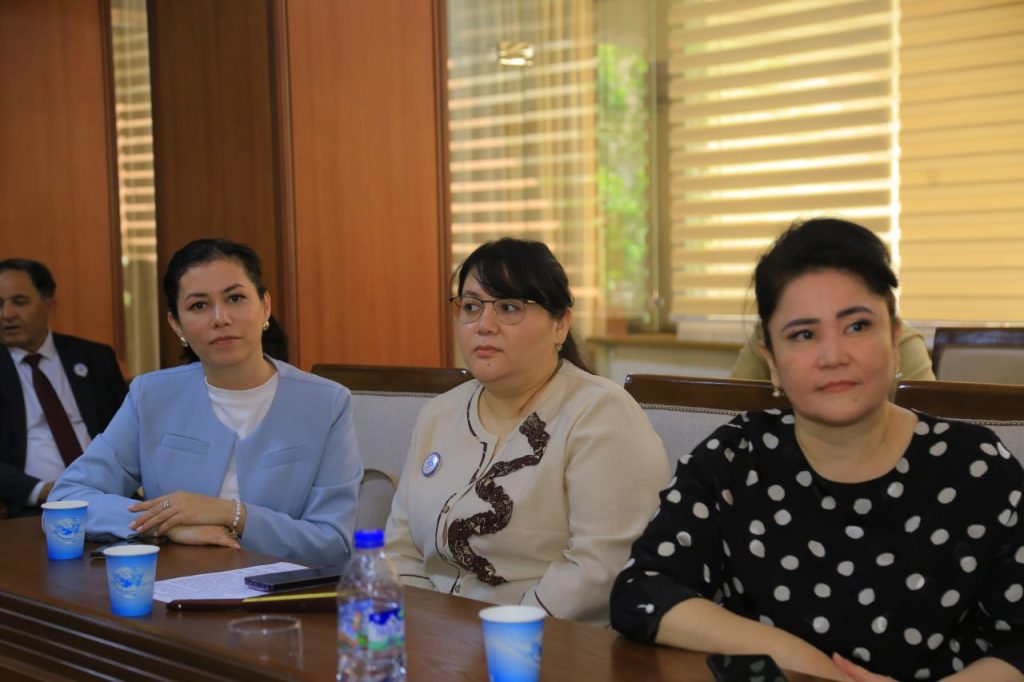
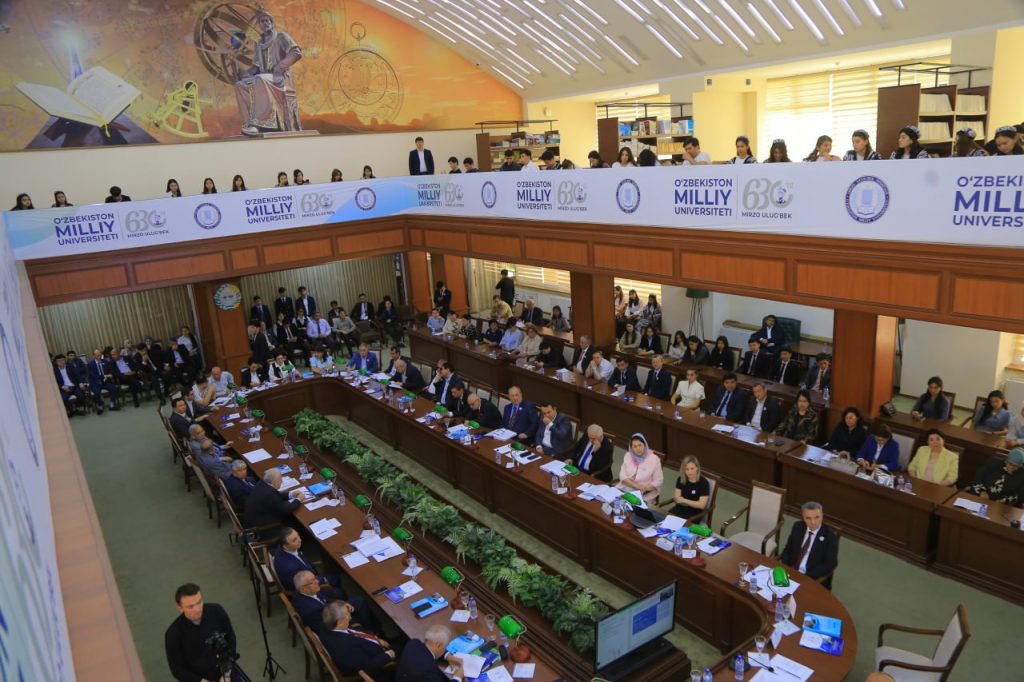
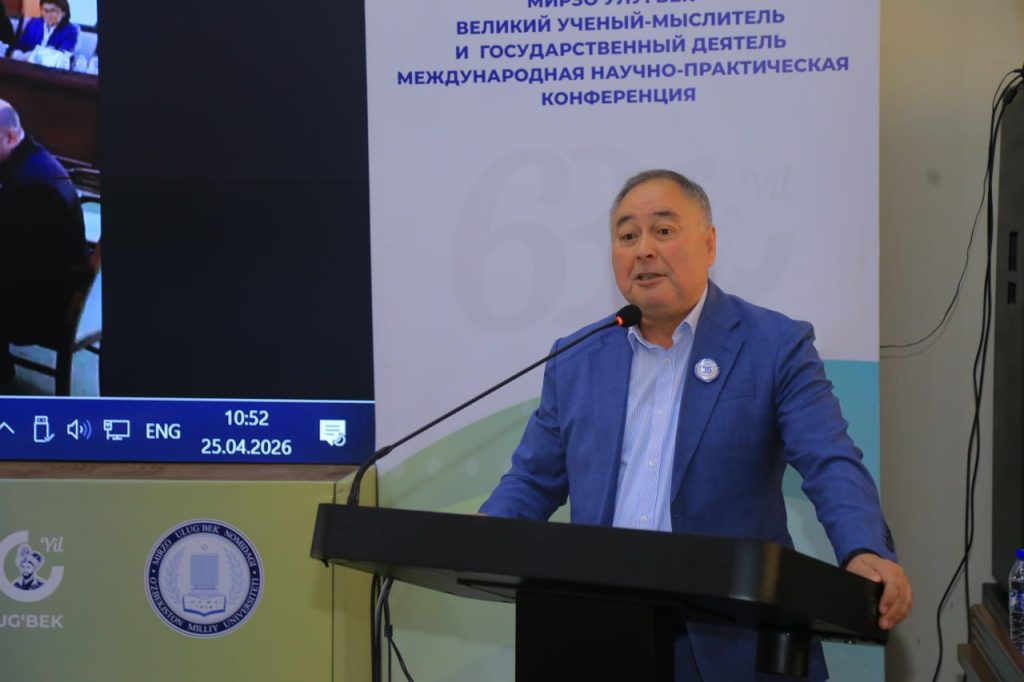
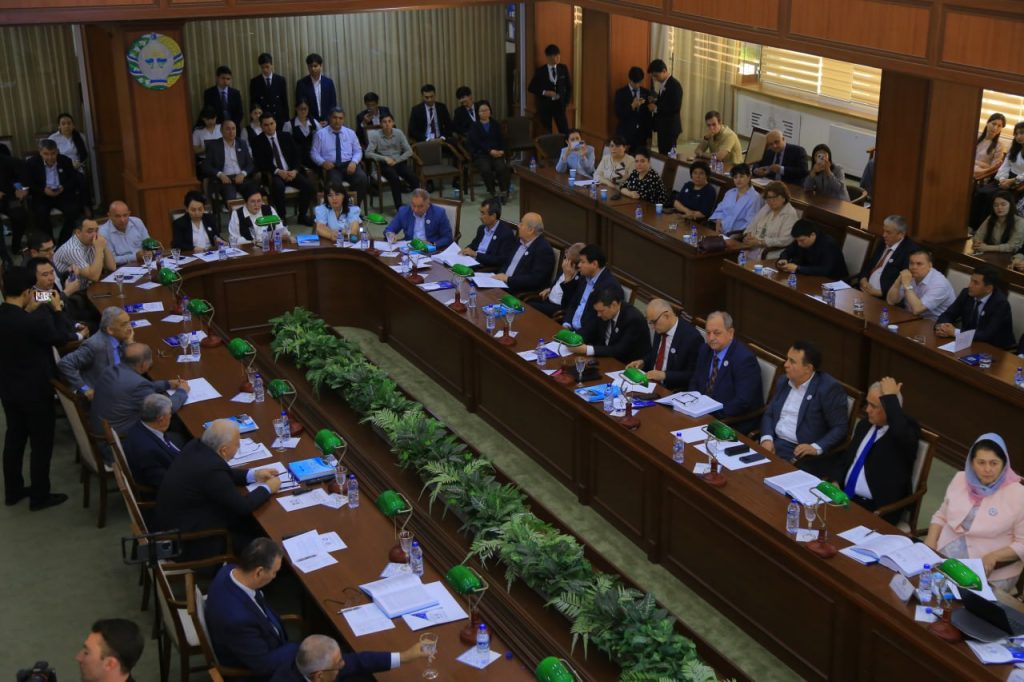
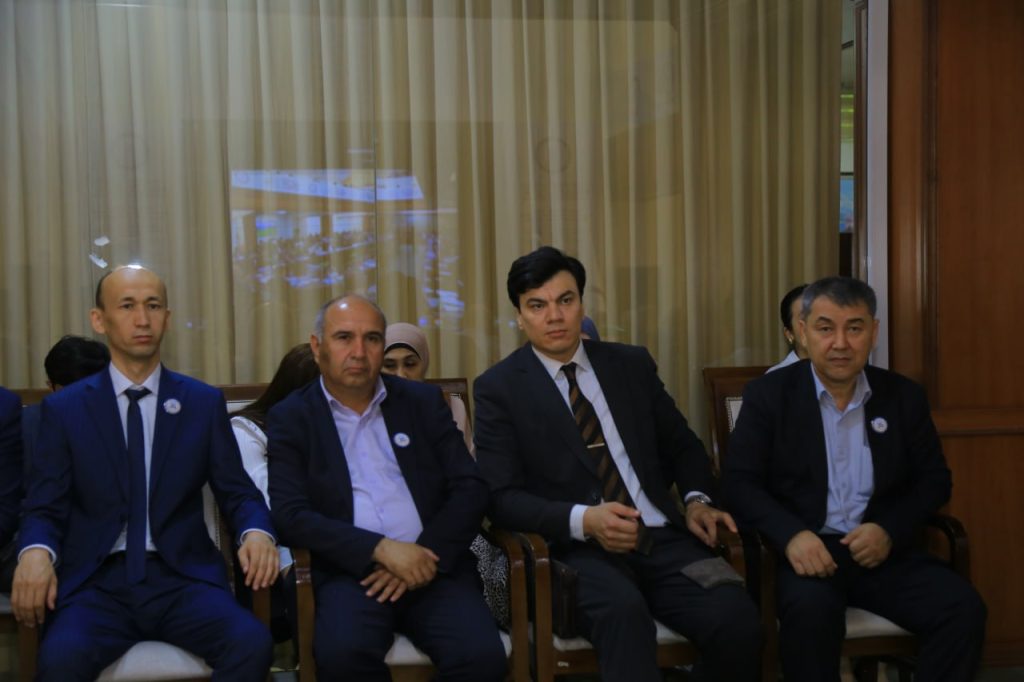
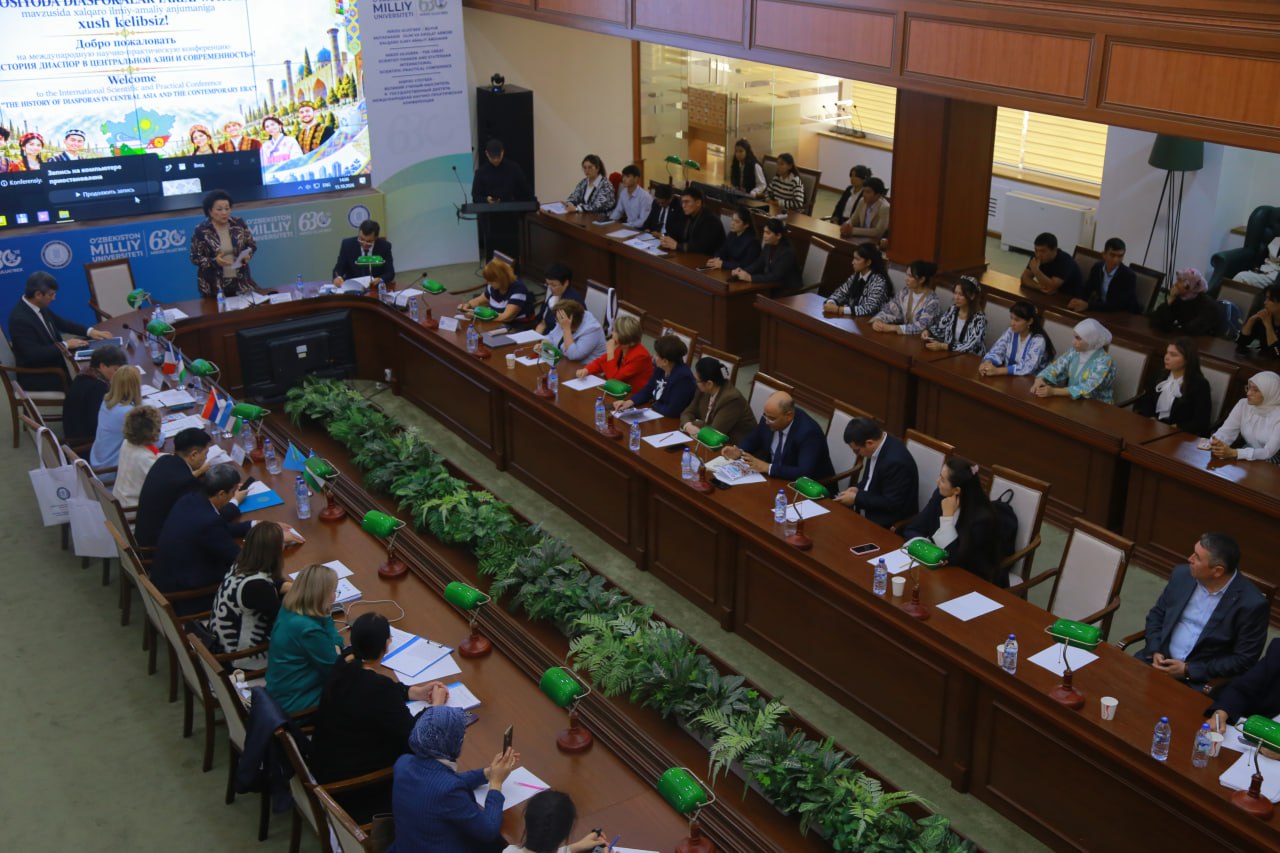
Today, April 25, the VI International Forum of Economists titled “Strategy for the Transition of the National Economy to a Resource-Efficient Model of Economic Development” commenced at the National University of Uzbekistan named after Mirzo Ulugbek. The event marks the 35th anniversary of the establishment of the Faculty of Economics.
This prestigious forum was organized by the National University of Uzbekistan in collaboration with higher education institutions from Russia, Slovakia, South Korea, and other foreign nations. The primary objective of the forum is to discuss the scientific and practical foundations of sustainable national economic development, the implementation of resource-saving technologies, and the transition to a “green” economy.
The conference was opened by the leadership of the National University of Uzbekistan, who highlighted the faculty’s 35-year historical journey and its significant role in training specialists for the country’s economy.
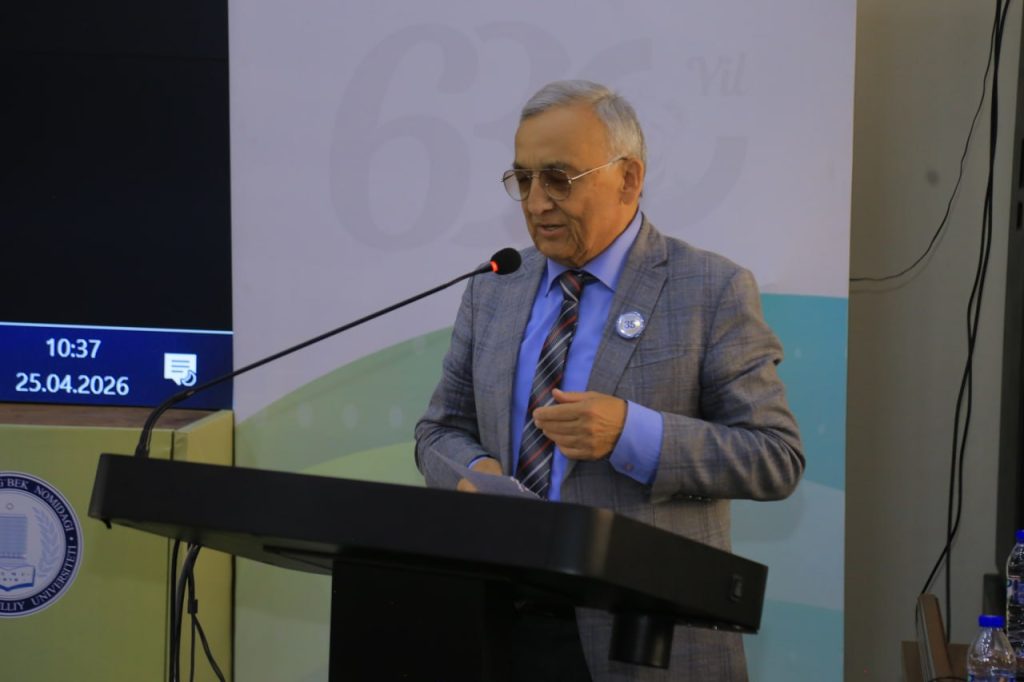
Welcoming remarks were delivered by NUUz Vice-Rectors Shukhrat Tashmatov and Yokub Ergashov, Chairman of the Association of Demographers of Uzbekistan Bahodir Umrzakov, Chairman of the Committee on Budget and Economic Reforms of the Legislative Chamber of the Oliy Majlis Sharofiddin Nazarov, Director General of “Uzbekinvest” Rustam Azimov, as well as international partners including Professors Alexander Siganov, Alexander Babkin, Choi Yun Chol, and the head of “Uzbek Leasing International” Zafarjon Mustafayev.
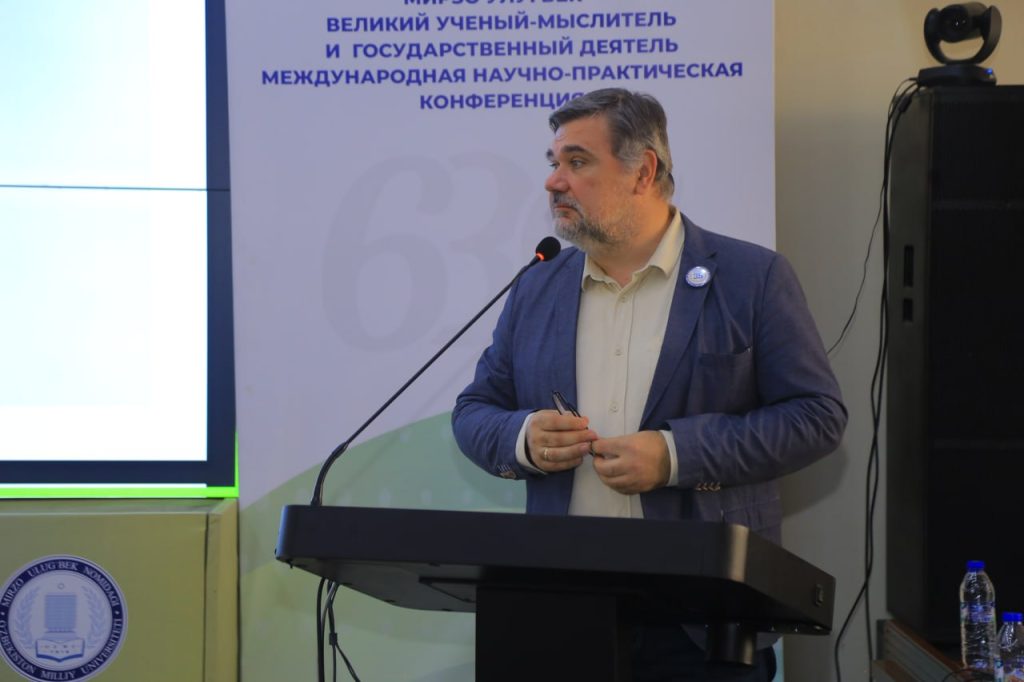
During the plenary session, national and international experts presented reports on pressing economic issues. Key speakers included: Avazbek Madaminovich Sodikov on the formation of a resource-efficient economic development model for Uzbekistan; Shukhrat Ganiyevich Yuldashev on the mechanisms of transitioning Uzbekistan’s economy to resource-saving growth; Adrianna Balega (Slovakia) on the geopolitics of international hydrogen trade during the energy transition; Shohmansur Shokha’zamiy on the concept of rapid transition to an innovative development model under global instability; and Shakhnoza Saidakmalovna Nasretdinova on the impact of the insurance market on the stability of the resource-efficient model.
The session also featured presentations by faculty members on digital technologies, artificial intelligence, “green” skills, and climate finance. At the conclusion of the event, strategic recommendations were developed to ensure national economic stability and elevate resource efficiency to a strategic priority.
The forum will continue its work across six specialized sessions, focusing on the theoretical aspects of resource efficiency, the application of new technologies in the real sector, the effective use of human capital, and international best practices.
For reference: The Faculty of Economics at NUUz was founded in 1991 and continues to train highly qualified professionals dedicated to enhancing the economic potential of the Republic of Uzbekistan.