
The department of “Computational Mathematics and Information Systems” began its activity in 1959 under the name “Computational Mathematics” and was headed by Associate Professor A.P. Domoryad until 1967, Associate Professor G.S. Salikhov in 1971-1979, Associate Professor Z.J. Jamolov in 1980-1993, Academician T.A. Azlarov in 1993-1995, Professor Kh.A. Muzafarov in 1995-2011, Professor R.D. Aloyev in 2012-2018, and Professor M.O. Khudoyberganov in 2018-2025. From February 3, 2025, DSc, Associate Professor I.O. Khajiev has been the head of the department.
From 1998, the department operated under the name “Computational Mathematics and Mathematical Modeling”, from September 2, 2002, “Computational Methods in Parallel Technologies”, from May 30, 2008, “Computational Technologies and Mathematical Modeling”, and from 2015, “Computational Technologies and Information Systems”. On May 25, 2016, the departments of “Computational Technologies and Information Systems” and “Information Security” merged and operated under the name “Mathematical Modeling and Cryptoanalysis”. By decision No. 2 of the NUUz Council on September 26, 2018, the department of “Computational Mathematics and Information Systems” was established.
The department conducts lectures and practical classes for undergraduate students in the areas of 60610200-Information Systems and Technologies, 60540400-Mathematical and Computer Modeling, 60540200-Applied Mathematics, 60540300-Mathematical Engineering, and 60540100-Mathematics on the subjects: Computational Methods, Numerical Methods, Mathematical and Statistical Modeling, Numerical Solution of Mathematical Physics Problems, Software Engineering, LMS Systems, Computer Mathematical Systems, Big Data Analysis, Information Systems Design, Spline Theory in Mathematical Modeling, Boundary Stabilization in Hyperbolic Flows, Applied Software for Image Processing, Methods of Teaching Mathematics and Informatics, and Numerical Methods for Solving Integral Equations.
The department conducts lectures and practical classes for master’s students in the specialties 70610103-Information Systems and 70540201-Applied Mathematics on the subjects: Theory of Difference Schemes, Scientific Software,Computational Methods for Ill-posed and Inverse Problems,Numerical Solution of Hyperbolic Equations,Mathematical Foundations of Computer Tomography,Digital Signal Processing, Modern Software Systems,and Mathematical Modeling of Ecological Processes.
More than 20 graduates of the “Computational Mathematics and Information Systems” department have successfully defended doctoral dissertations and more than 35 have defended candidate dissertations. Today, they are making a worthy contribution to the training of qualified personnel and the advancement of science in our Republic.
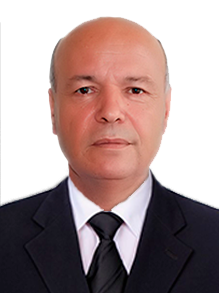
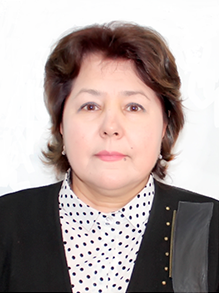
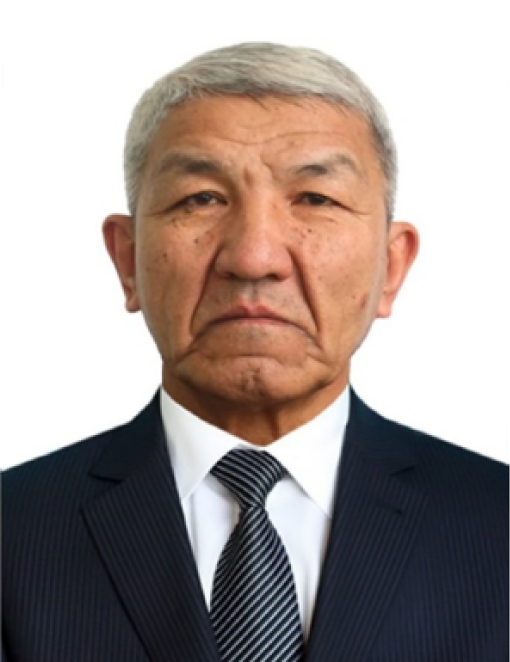
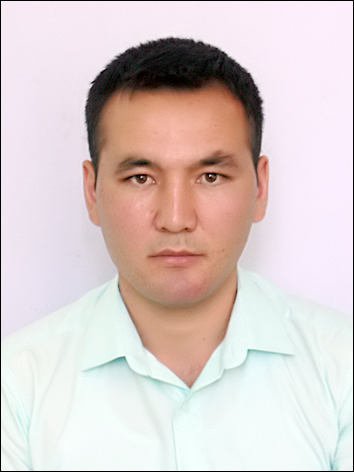
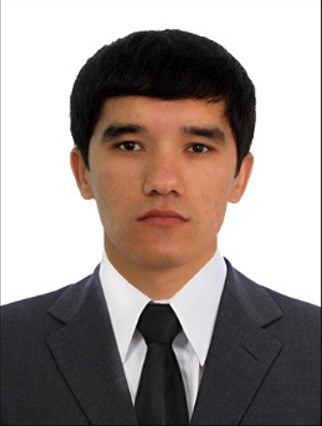
Currently, DSc Prof. R.D. Aloyev, DSc Prof. L.P. Varlamova, DSc Prof. M.O. Khudoyberganov, DSc Assoc.Prof. S.A. Bakhromov, DSc Assoc.Prof. I.O.Khajiev, senior teacher O.N. Abdurakhmonov, teachers D.K. Karimov, V.B. Alimova, A.O. Kakhkhorov, and trainee teachers Sh.E. Ergasheva, N.N. Kurbonov are working at the department.
Computational mathematics and information systems
Head of the department
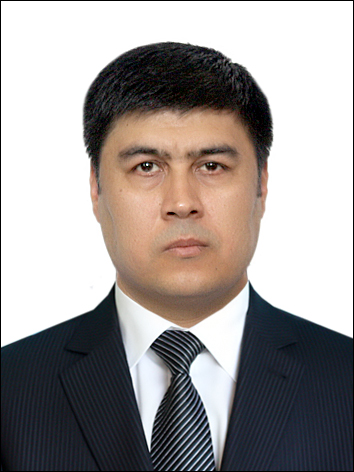
XAJIYEV IKROMBEK OZODOVICH
Head of Department
Degree:
Doctor of Sciences, DSc
Scientific title:
Associate Professor
Reception days:
Monday - Friday, 09:00 - 17:00
Address:
Address: 100174, Tashkent city, Almazor district, University street, 4th house
History of the department
The composition of the department



Scientific activity
The professors and teachers of the department are engaged in current problems of computational and applied mathematics, such as constructing adequate computational models for mixed problems of hyperbolic systems, ill-posed and inverse problems of mathematical physics, constructing spline functions in approximation theory and estimating their errors in various classes, the application of spline functions specifically in restoring and processing various geophysical signals, constructing quadrature and cubature formulas used in approximate calculations of regular and singular integrals, constructing spline functions that allow increasing the convergence speed to an exact solution, researching complex processes and objects through mathematical modeling, applying parallel technologies in mathematical modeling, and image processing.
The team of the Department of Computational Mathematics and Information Systems organizes the conference “COMPUTATIONAL MODELS AND TECHNOLOGIES” every two years at the international or national level.
The goal is to share the research findings of well-known scientists and researchers working in Central Asia in fields such as computational mathematics, computational technologies, information security and engineering technologies, computational algebra and function theory, mathematical modeling and statistics, and artificial intelligence, and to hold this conference biennially to develop modern science in the region.
Scientific Projects Implemented by the Department
- 2009-2012: “Optimization of the educational process and forecasting student performance.” Supervisor: R.D. Aloyev.
- 2017-2020: “Construction of adequate computational models for hyperbolic systems.” Supervisor: R.D. Aloyev.
- 2021-2023: “Lie symmetry analysis, analysis and modeling of Lyapunov stability of hyperbolic systems,” Uzbekistan-India joint project. Supervisor: R.D. Aloyev.
International cooperation
Currently, the department has established cooperation with prestigious higher education institutions worldwide, including Universiti Putra Malaysia (UPM), Universiti Teknologi MARA (UiTM), Universiti Malaysia Terengganu (UMT), and Universiti Sains Islam Malaysia (USIM); the Indian Institute of Technology Roorkee (IIT Roorkee) in India; Abai Kazakh National Pedagogical University, International IT University (IITU), L.N. Gumilyov Eurasian National University, and Al-Farabi Kazakh National University in Kazakhstan; the Keldysh Institute of Applied Mathematics, Lomonosov Moscow State University, Novosibirsk State University, and Tomsk State University in Russia.
Faculty members from these institutions are involved in the educational process, and joint scientific research is being conducted. Collaborative monographs and scientific articles are published in journals indexed in the Scopus and Web of Science databases.