At the end of the 19th and the beginning of the 20th century, the development of experimental techniques in physics led to significant changes. Classical physics, as it was known then, was unable to explain several experimental results in the study of nature, necessitating the introduction of new ideas and concepts. M. Planck’s introduction of the concept of quanta in the creation of the black-body radiation theory led to the emergence of quantum theory. A. Einstein established the foundations of the special theory of relativity, giving new meaning to space and time. Consequently, theoretical physics emerged as an independent discipline and began to develop rapidly. As a manifestation of this progress, the Department of Theoretical Physics was established at the Central Asian State University in 1935, being among the first of its kind.
The Department of Theoretical Physics has been led by prominent and renowned educators and scientists. Its first head was Doctor of Physical and Mathematical Sciences, Professor Anatoliy Yevgenevich Levashev. From 1955, the scientific direction of the Department began to take shape in accordance with the plans of the Institute of Physics and Technology of the Academy of Sciences of the Republic of Uzbekistan and research orders. Several works dedicated to the development and generalization of the phenomenological theory of semiconductors gained great practical importance. These studies by theoretical physicists were conducted within the framework of ion-electron emission, surface ionization, and semiconductor physics (S.U. Umarov, G.M. Avakyants, A. Teshaboev, R. Mamatqulov, N.A. Brynskikh). In 1960, a specialized problems laboratory for semiconductors was established under the Department, and its scientific activities began to expand. This laboratory later served as the foundation for a new department. A number of theoretical and experimental works were dedicated to studying the static current-voltage characteristics of diodes made from deeply compensated semiconductor materials. From that time on, the primary research focus of the department was the theory of semiconductors and the devices based on them. During this period, the department achieved significant positive results, including the discovery and study of the inductive properties of semiconductor devices. Other works focused on increasing the power of semiconductor devices.
Since the 1960s, scientific research in the field of elementary particle physics began at the department. The establishment of scientific links with major high-capacity research centers—the Joint Institute for Nuclear Research (JINR, Dubna, Russia) and the Lebedev Physical Institute (LPI RAS, Moscow)—created a foundation for active research in this area. From that point, the department’s scientific directions expanded, and alongside semiconductor physics, new research began on scattering theory and the application of group theory methods in elementary particle physics. Particular mention should be made of the works on electron scattering in complex nuclei (Yu. Pol), and the scattering and photoproduction of mesons on deuterons (V.A. Pazdzerskiy and I. Amirkhanov). The research by Kh.V. Valiev on potentials with high symmetry, and several works by A.L. Zubarev and M.A. Qosimjonov on the application of group theory in reactions involving elementary particles, are highly commendable. Additionally, the work of Yu.E. Lozovik on the application of quantum field theory methods in statistical physics should be highlighted. Scientific research on the generalized nuclear model was conducted by A. Latipov and R. Karaev.
In 1973, Academician M.M. Musakhanov was appointed Head of the Department of Theoretical Physics. His arrival marked the beginning of scientific research in new directions such as high-energy physics, atomic and nuclear collisions, and the interaction of radiation with matter. The works of Acad. M.M. Musakhanov on the use of the chiral model in hadron physics and Prof. A.L. Zubarev on the application of Schwinger-type variational principles to few-body problems were awarded the Prize of the Academy of Sciences of the Republic of Uzbekistan in 1979. In 1983, Acad. M.M. Musakhanov, along with a group of scientists, was awarded the Abu Rayhon Beruniy State Prize of Uzbekistan for a series of fundamental studies in science and technology titled “The interaction of leptons and hadrons with the atomic nucleus and the interaction of optical radiation with matter.”
In the field of relativistic theory of bound states within quantum electrodynamics, significant results were achieved regarding the description of hydrogen-like atom properties. Based on modern experimental data in high-energy physics, the influence of vacuum polarization effects—stemming from hadron annihilation—on certain measurable quantities was evaluated with high precision. Specifically, the contributions of this effect to the anomalous magnetic moments of electrons and muons, as well as to atomic energy levels, were calculated. The properties of dimesoatoms and hadronic atoms composed of certain elementary particles were determined using relativistic equations while accounting for strong interaction effects; notably, the energy levels of muonic hydrogen were calculated (Assoc. Prof. A. Karimkhodjaev).
In subsequent years, Academician M.M. Musakhanov conducted intensive research in the field of quark physics. Within the framework of quantum chromodynamics, a new model proposed to describe the properties of hadrons, titled the “Chiral Quark-Soliton Model” (Chiral Quark Bag), gained recognition within the international scientific community. Research on quark structure was actively pursued based on this model.
A new era for the Department of Theoretical Physics began following the independence of the Republic of Uzbekistan. Scientific investigations commenced in several directions dedicated to contemporary issues in physics. These include low and intermediate-energy nuclear physics (led by Acad. M.M. Musakhanov), atomic and nuclear collisions (led by Prof. B.F. Irgaziev), interaction of radiation with matter (led by Prof. V.A. Pazdzerskiy), and the theory of nonlinear waves in condensed media (led by Prof. A.A. Abdumalikov).
A highly capable group under the leadership of Acad. M.M. Musakhanov achieved several important scientific results in elementary particle theory: within quantum chromodynamics—the foundation of hadron physics—research on instantons, light quark masses, anomalies, and skyrmions received wide recognition (U. Yakhshiev, M. Siddikov, A. Rakhimov, D. Pak). In the field of quantized field theory, which serves as the basis for elementary particles, a new formalism—the effective action formalism—was developed, through which an exact expression for the axial anomaly was found (M. Musakhanov, B. Fayzullaev). Using the chiral bag model, the baryon mass spectrum was calculated, and other properties related to the pion cloud surrounding baryons were studied. Based on results derived from Lee and Bardeen quantum determinants, a non-perturbative theory of quarks was developed, applied to the quark model, and a theorem arising from the axial anomaly was proven, demonstrating that the instanton model precisely satisfies this theorem. Additionally, the contribution of virtual charm was calculated during the process of gluon production and their subsequent transition into eta-mesons. Acad. M.M. Musakhanov, along with department staff, developed a theory used to describe the interaction of multi-charged fast ions, allowing for a departure from the Born approximation. In recent years, he has focused on problems of nucleon-chiral soliton theory in nuclear matter, predicting several properties of the nucleon within the nucleus. Furthermore, the properties of electrons in two-dimensional media under multicorrelation were studied for the first time.
In the field of radiation interaction with matter, the study of the interaction between atoms, ions, and molecules with quantized light fields remains a vital area of modern physics. Prof. V.A. Pazdzerskiy was the leading scientist at the Department who significantly contributed to this field. He worked on issues involving atomic collisions and ionization, the asymmetric effect of strong laser bichromatic light on atoms, the ionization of atoms by high-energy high-charge ions, and electron attachment to atoms. Theoretical frameworks were established for the interaction of intense and ultra-intense laser radiation with matter in strong electromagnetic fields. Theoretical studies were conducted on multi-quantum photo-processes (photoionization, photorecombination, induced bremsstrahlung scattering, high-harmonic generation) occurring in quantum mechanical systems such as free electrons, ions, atoms, molecules, clusters, and crystals. The resonance absorption of electromagnetic radiation in electron-atom collisions and the distribution of photoelectrons under the influence of strong laser radiation fields were also investigated (V.A. Pazdzerskiy, V. Yurovskiy, A. Voytkiv, V. Usachenko, R. Alimov, P. Pyak).
Alongside elementary particle theory, the research group conducted scientific work on the theory of nonlinear wave propagation in various media. Specifically, the dynamics of solitons and the influence of the external environment in nonlinear and inhomogeneous media (ferromagnets, optical fibers, etc.) were studied. A theory of solitons and soliton-like disturbances in inhomogeneous media with spontaneously broken symmetry was developed (A. Abdumalikov). The dynamics of solitons in stochastic molecular crystals, magnets, ferroelectrics, and liquid crystals were explored. It was demonstrated that dissipative breathers can emerge in nematic liquid crystals under the influence of viscosity and external fields (F.K. Abdullaev, A.A. Abdumalikov, A.S. Rakhmatov, E.N. Tsoy). A new region of modulation instability for waves in media with periodic and nonlinear modulated parameters in the presence of high-order dispersion was identified (A.A. Abdumalikov, F.K. Abdullaev, B. Baizakov). Soliton dynamics in coupled ferromagnetic films were studied, and the conditions for soliton transition from one film to another and their existence in a bound state were determined (A.A. Abdumalikov, T.B. Norboev). Discrete solitons in nonlinear discrete systems were investigated. In the models of the exactly integrable Ablowitz–Ladik and discrete nonlinear Schrödinger equations, the emergence points of stable solitons were predicted.
Prof. B.F. Irgaziev conducted research on atomic nuclear theory. Studies in this area focused on the collisions of light nuclei with heavy nuclei, the influence of the Coulomb field on nuclear processes, few-body systems, muon catalysis (the effect of muons on nuclear processes), and the application of these effects to astrophysics, leading to significant achievements. For many years, Prof. B.F. Irgaziev worked on few-body problems in nuclear physics (super-heavy hydrogen and helium-3). Through international cooperation, reactions critical to nuclear astrophysics were studied, and values related to element formation resulting from stellar reactions were calculated.
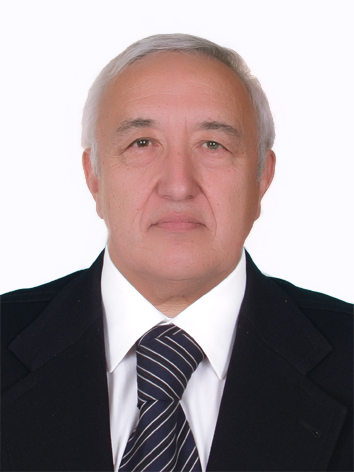
Academician Musakhanov Mirzayusuf Mirzamaxmudovich led the Department of Theoretical Physics from 1972 to 2005. He graduated from the Faculty of Physics at M.V. Lomonosov Moscow State University in 1967. He received his Candidate of Physical and Mathematical Sciences degree in 1972 (JINR, Dubna, Russia) and his Doctor of Physical and Mathematical Sciences degree in 1982 (ITP, Kyiv, Ukraine). He became a Professor and was elected an Academician of the Academy of Sciences of Uzbekistan in 1995. He is a laureate of the Academy of Sciences of Uzbekistan Prize (1978) and the Abu Rayhon Beruniy State Prize (1983). In 2003, Academician M.M. Musakhanov was awarded the “Shuhrat” Order in recognition of his significant contributions to the development of physics in Uzbekistan—particularly high-energy and quark physics—his role in shaping theoretical physics education, and his many years of productive work at the National University of Uzbekistan. He served as a visiting professor at the Department of Physics, University of Alberta (Canada, 1994-1995); RCNP, Osaka National University (Japan, 1997-1998); and the Department of Physics, Pusan National University (South Korea, 2004-2005). He was a member of the Scientific Council at the International Centre for Theoretical Physics (ICTP, Italy, 1994-2002); JINR (Dubna, 2003-2008); and has been a member of the Scientific Council of the Asia-Pacific Center for Theoretical Physics (APCTP, South Korea) since 2010. He is a recipient of grants from several scientific foundations and has published over 180 scientific works. He serves as the Chairman of the Specialized Council for the specialty 01.02.04 – Theoretical Physics and has organized numerous international conferences.
Scientific research at the Department of Theoretical Physics is organized at a high level, with significant emphasis placed on fundamental and innovative studies. Substantial achievements have been recorded, particularly in the fields of high and low-energy nuclear physics (Acad. M.M. Musakhanov), the interaction of radiation with matter (Prof. V.A. Pazdzerskiy), and the theory of nonlinear waves in condensed media (Prof. A.A. Abdumalikov). Furthermore, since 1983, a Specialized Scientific Council for awarding doctoral and candidate degrees in Theoretical Physics has been operating to train highly qualified specialists.
The field of Theoretical Physics holds a distinct position within the Faculty of Physics regarding personnel training. A creative team of department members led by Prof. A.A. Abdumalikov published a four-volume textbook series titled “Theoretical Physics Course” in the Uzbek language between 2008 and 2011 (B.A. Fayzullayev, “Theoretical Mechanics”; A.A. Abdumalikov, “Electrodynamics”; M.M. Musakhanov and A.S. Rahmatov, “Quantum Mechanics”; A.A. Abdumalikov and R. Mamatqulov, “Thermodynamics and Statistical Physics”). In 2015, the textbooks “Methods of Mathematical Physics” (B.A. Fayzullayev, A.S. Rahmatov) and “Mathematical Methods of Theoretical Physics” (B.A. Fayzullayev), intended for master’s students, were also published. The department takes pride in its highly qualified and distinguished lecturers and professors.
The 21st-century educational paradigm emphasizes that this era is becoming the age of e-learning. The rapid integration of information and communication technologies (ICT) into the educational process has led to significant changes in the education system.
The e-learning environment primarily encompasses four components:
- – System (infrastructure, information system).
- – Human Factor (teachers, students, technical staff).
- – Content (organizational part of the information system, collection of educational literature).
- – Didactics (foundations of electronic pedagogy).
Creating these components is a vital task, as modern university education cannot be imagined without them. Extensive research on establishing these components, technical solutions, methodologies for creating modern electronic textbooks, and the importance of active participation of faculty and students within the electronic environment is reflected in the pedagogical activities of department members (A. Karimkhodjaev, T. Norboev). Recognizing that the informatization process differs fundamentally from simple computerization and requires significant investment, the department successfully secured 12 international donor grants (totaling 825,000 Euros and 240,000 USD). Utilizing grants from TEMPUS (European Union) and UNESCO, computer networks were established not only for NUUz but also for the “Talabalar shaharchasi” and “Shifokorlar shaharchasi”
In addition to infrastructure, the qualifications of system administrators (the human factor) from eight Uzbek universities (NUUz, TSTU, TSMI, TMA, TSDI, BSU, GSU, and the Higher Military Institute) were enhanced at leading European universities (over 100 specialists in total). This led to the creation of the horizontal UZNANETU/UZSCINET network, enabling direct internet communication with partners (A. Karimkhodjaev, T. Norboev). An Open Educational Information Center, equipped with 52 computers and modern servers, was launched (A. Karimkhodjaev, A.S. Rahmatov), and a UNESCO Chair in Astronomy and Physics was established (M.M. Musakhanov, A.S. Rahmatov).
To sustain such large-scale cooperation, “content”—specifically educational literature—must be available and continuously updated on the network. Consequently, the MOODLE “open” resource platform was implemented, and electronic courses in theoretical mechanics and information technology were launched (A. Karimkhodjaev, T. Norboev).
In recent years, alongside the aforementioned research, scientific work in relativistic astrophysics, gravitation, and cosmology has been conducted in collaboration with the Astronomy Institute of the Academy of Sciences of Uzbekistan. Led by Prof. B.J. Ahmedov, and including Dr. A.A. Abdujabbarov and others, significant results have been achieved in the relativistic astrophysics of neutron stars and black holes, gravitational waves, cosmology, and the study of optical processes around rotating black holes in plasma.
Recent honors include:
- On December 29, 2023, Pahlavon Navruzovich Yovqochev, a graduate student, was awarded the State Stipend of the President of the Republic of Uzbekistan.
- In 2025, Associate Professor Azamxon Sayfiyevich Raxmatov was awarded the badge “O‘zbekiston Milliy universiteti iftixori”.
Currently, the department actively operates a Master’s program in Physics (70530501 – Theoretical Physics), with 20 first-year and 9 second-year students. Acad. M.M. Musakhanov conducts special courses on the “Standard Model,” and Prof. B.F. Irgaziyev teaches “Scattering Theory,” both in English. Additionally, Professor Katsihura Nakamura from Osaka University (Japan) conducts scientific research at the department and delivers lectures on general courses.
The Republic’s only Scientific Council for awarding PhD and DSc degrees in specialty 01.04.02 – Theoretical Physics continues to function at the department. Currently, J.A. Khasanov is in the second year of his doctoral studies, working on his PhD dissertation under the supervision of Prof. B.F. Irgaziyev. Between 2023 and 2025, the department conducted a scientific grant titled “Practical Aspects of Modern Advanced Physics.”
By decree of the Cabinet of Ministers of the Republic of Uzbekistan, the **Institute of Theoretical Physics** commenced its activities under the National University of Uzbekistan on December 17, 2025. Academician B.J. Ahmedov was appointed as the director of the institute.
The department has well-established scientific and educational cooperation with foreign countries:
- An agreement is in place with the **Asia Pacific Center for Theoretical Physics (South Korea)** for joint scientific research and conferences.
- An agreement with the **Institute of Modern Physics of the Chinese Academy of Sciences** facilitates research, specialist exchange, and joint seminars.
- A scientific and cultural cooperation agreement exists with **Inha University (South Korea)**. Currently, department member Ulugbek Yakhshiev is conducting research at Inha University.
- During the 2022-2024 academic years, two projects were implemented under the **Erasmus+** program:
-
- “National Qualifications Framework: Guidance for Development and Recognition of Qualifications” (Project leader: Assoc. Prof. A. Karimkhodjaev).
- “Medical Physics: New ICT-based Curricula for Uzbekistan” (Project leader: Assoc. Prof. A. Karimkhodjaev).