
In 1956, on the initiative of S.A. Azimov, the Department of the Structure of Matter was established at the Central Asian State University (CASU), where the first specialists in nuclear physics and cosmic rays in Central Asia began training. In 1957, a special laboratory for nuclear physics and cosmic rays was established at the department. Within three years, a 25 MeV betatron was installed in the special laboratory, and research began on measuring the interaction cross sections of gamma quanta with various nuclei (V.S. Masagutov). The Kumbel high-altitude station was also built at an altitude of 3,160 m above sea level, where research began on the characteristics of nuclear interactions and electromagnetic cascades using the most modern methods of the time in the energy range of 1011-1012 eV (Yu.P. Kratenko).
A separate Department of Radiation Physics was created from the Department of the Structure of Matter specifically to train personnel for the new Institute of Nuclear Physics, and the Department of the Structure of Matter was renamed the Department of Nuclear Physics and Cosmic Rays with a focus on training personnel not only in the field of low-energy nuclear physics, but also in the field of high-energy physics and cosmic ray physics.
Fundamental scientific research in the department’s problem laboratory was accompanied by a wide range of applied nuclear physics work in Uzbekistan. In the 1970s, construction began on the department’s betatron laboratory, equipped with a 50 MeV betatron. This laboratory later became the foundation for the Institute of Applied Physics at Tashkent State University, headed by T.M. Muminov.
Over the course of more than half a century, the department has trained over 15,000 nuclear physics specialists, who work not only in Uzbekistan but also in other republics of the former Soviet Union. More than 300 people have received academic degrees, including approximately 30 doctors of science. Among the department’s graduates are such renowned scientists as U.G. Gulyamov, A.A. Abdurazakov, R.B. Begzhanov, and B.S. Yuldashev.
Over the years, the department has been headed by Academician S.A. Azimov, A.A. Abdurazakov, R.B. Begzhanov, B.S. Yuldashev, T.S. Yuldashbaev, Professor A.M. Mukhamedzhanov, K.R. Nasriddinov, A.A. Abdumalikov, and Associate Professor Z. Kanokov.
In 2005, the Department of Nuclear Physics and the Department of Theoretical Physics were merged into a single Department of Nuclear and Theoretical Physics. On May 25, 2016, the Department of Low Energy Physics was established on the basis of this department, based on Decree of the President of the Republic of Uzbekistan No. PP-2527 “On measures to further improve the activities of the National University of Uzbekistan” dated May 11, 2016. On October 25, 2017, by decision of University Council No. 3, the Department of Low Energy Physics was renamed the Department of Nuclear Physics. Associate Professor S.R. Polvonov was elected Head of the Department.
In 2024, following departmental optimization by Rector’s Order No. 01-372 dated October 3, 2024, the Departments of Nuclear Physics and Astronomy of the National University of Uzbekistan were merged to form the Department of Nuclear Physics and Astronomy.
Currently, the department conducts theoretical and experimental research on current issues in nuclear physics and astronomy. The department maintains close scientific contacts with leading research centers in the country: the Institute of Nuclear Physics of the Academy of Sciences of the Republic of Uzbekistan, the Physics and Technology Institute of the Academy of Sciences of the Republic of Uzbekistan, the Institute of Astronomy of the Academy of Sciences of the Republic of Uzbekistan, and the Republican Specialized Oncology and Radiology Scientific and Practical Medical Centers of the Ministry of Health of the Republic of Uzbekistan. Additionally, links have been established with international research centers in Russia, South Korea, Germany, and other countries, and joint research is being conducted.
Currently, the department employs 4 doctors of science, 3 candidates of science, and 3 PhDs. The department offers master’s programs in the following specialties: 70530502 – Nuclear Physics and Technology, 70530507 – Medical Physics, 70530701 – Astronomy. The department also has a scientific council for awarding academic degrees DSc.03/2025.27.12.FM.01.05 in specialty 01.03.02 – Space Physics and Astrophysics.
Nuclear physics and astronomy
Head of the department

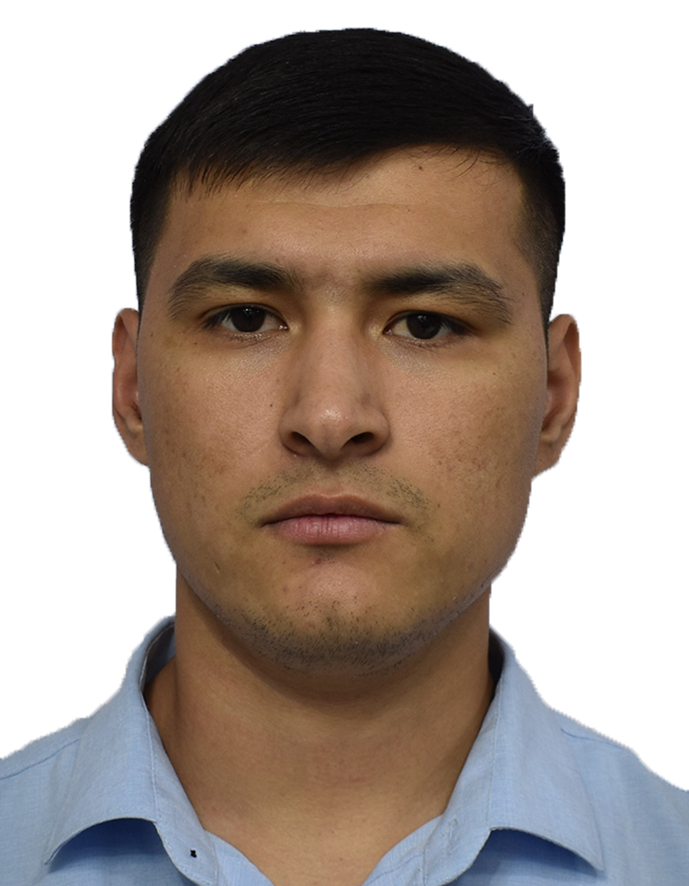
POLVONOV SATIMBOY RAJAPOVICH
Head of Department
Degree:
Doctor of Sciences, DSc
Scientific title:
Professor
Reception days:
Monday - Friday, 09:00 - 17:00
Address:
Address: 100174, Tashkent city, Almazor district, University street, 4th house
History of the department
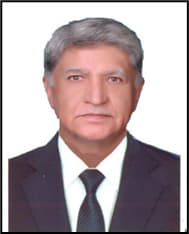
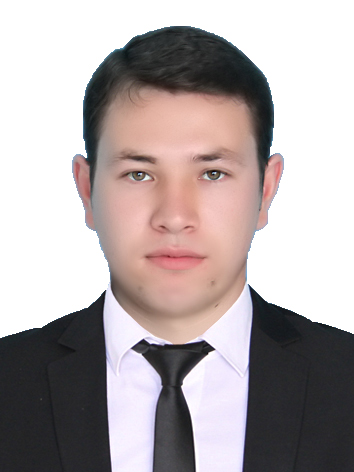
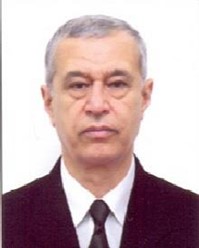
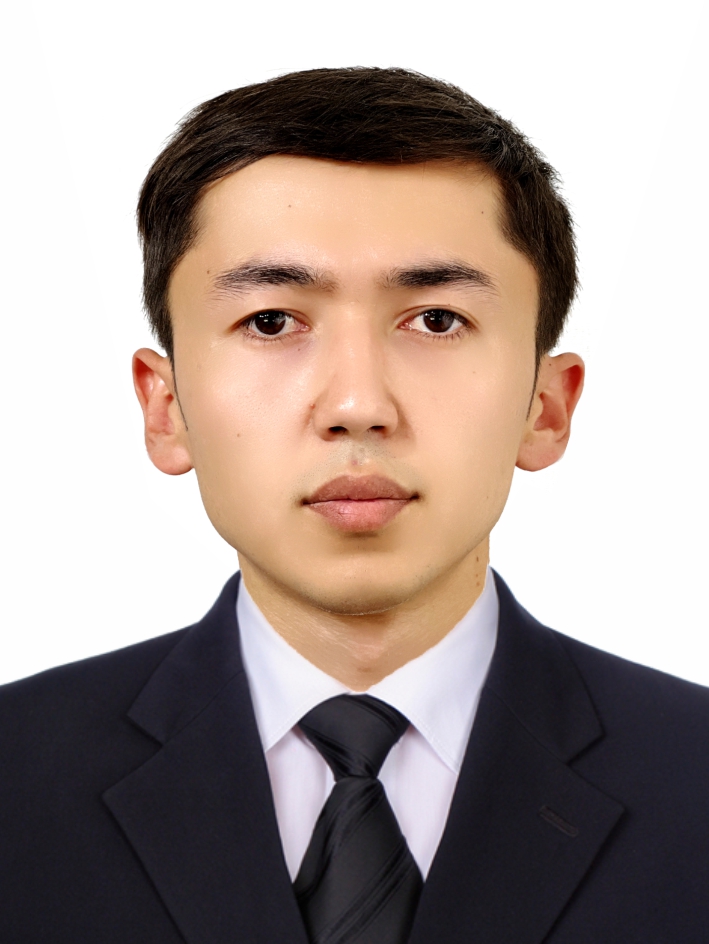
The composition of the department





Scientific activity
Scientific directions
The department conducts research in two areas. These are nuclear physics and astronomy. In the field of nuclear physics and technologies, research is mainly conducted on the study of the relative excitations of isomeric states in photonuclear reactions and reactions involving neutrons, that is, the ratios of reaction isomer yields and cross sections. Also, in nuclear ecology, representatives of the academician T.M. Muminov school have been conducting research on the distribution and migration of cesium-137 and strontium-90 radionuclides in various regions of our country for many years. Recently, research has also been conducted in the field of nuclear medicine.
Scientific research in the field of astronomy is also carried out at the department. It is mainly focused on theoretical problems of the physics of our Galaxy and galaxies and is closely integrated with observational astrophysics. The main research areas include the study of galaxy evolution and stability, the physics of star clusters and binary systems, gravitational lenses and quasars, as well as the mechanisms of formation of large-scale cosmic structures. These studies are aimed at a comprehensive solution of the most pressing problems of modern astrophysics based on both theory and observations.
Research projects implemented at the department
- – In 2023-2024, a grant of 188,300 euros under the name UZB0006 “Enhancing the Capacities of Educational Institutions for the Sustainable Use of Nuclear Technologies” is being implemented at the National University of Uzbekistan and Samarkand State University. Xolboev I.
- – «RER0049 “Enhancing the Capacities of Educational Institutions for the Sustainable Use of Nuclear Technologies” (implementation period from January 16, 2023 to January 14, 2026). Polvonov S.R.
- – FZ-2020092851. “Physics of small-scale perturbation instabilities against the background of pulsations of self-gravitating systems with different geometries”, Prof. S.N. Nuritdinov. Annual budget: 341,872 thousand soums.
- – FZ-20200929344 . “Determination of delay times and gravitational lensing mechanisms in preferential gravitational lensed systems” Doctor of Physics (PhD). T.A. Akhunov. Annual budget: 301,351 thousand soums
International cooperation
- St. Petersburg Pedagogical University (Russia)
- Kaunas University of Technology (Lithuania)
- Moscow State University (Russia)
- Belarusian State University (Belarus)
- Joint Institute for Nuclear Research, Dubna (Russia)

Also, experts sent by the IAEA have closely assisted in adapting the qualification requirements and curricula of the department to international requirements.
The following projects of the Atomic Energy Agency have been implemented in the department:
• In 2023-2024, a grant of 188,300 euros under the name UZB0006 “Increasing the potential of nuclear physics and technologies for peaceful purposes at the National University of Uzbekistan and Samarkand State University” is being implemented.
• «RER0049 “Enhancing the Capacities of Educational Institutions for the Sustainable use of Nuclear Technologies” (implementation period from January 16, 2023 to January 14, 2026)
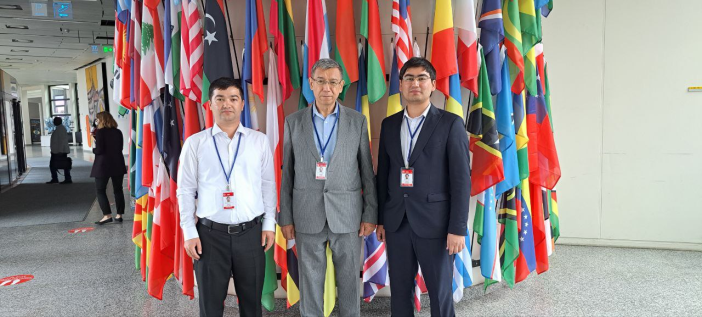
Vena, 2022 yil 4-12 iyul