The starting point of research in the field of semiconductors in Uzbekistan can be considered 1960, when, under the leadership of Professor of the Department of Theoretical Physics G.M. Avakyants (later a corresponding member of the Academy of Sciences of the Armenian SSR), the problematic laboratory of semiconductor physics was organized, which began training the first specialists in the field of semiconductor and dielectric physics. In 1966-1970, many talented young people were attracted to this field, which made it possible to solve a wide range of scientific and practical problems in the field of semiconductor physics and semiconductor devices. The growth of the scientific and potential of the industrial laboratory, the scale of scientific research, their scientific and practical significance and achievements in the field of specialist training led to the establishment of the Department of Semiconductor and Dielectric Physics on its basis in 1970, the first head of which was A.T. Teshabaev, who headed the department until 1981. In 1981-1996, the department was headed by Professor S.Z. Zainobidinov, later rector of Andijan State University, academician of the Academy of Sciences of the Republic of Uzbekistan. From 1996 to 2012, it was headed by Professor S.I. Vlasov, under whose leadership the Department of Physics of Semiconductors and Dielectrics for the first time in Uzbekistan began training specialists in the field of photovoltaics and renewable energy.
In 1994, on the initiative of Academician S. Rashidova, the Department of Polymer Physics was established. In December 2011, the Department of Physics of Semiconductors and Dielectrics and the Department of Physics of Polymers were merged into the Department of Physics of Semiconductors and Polymers. The joint department was headed by Prof. Vlasov S.I. In 2012-2017, the department was headed by Associate Professor D.E. Nazirov, from 2017 to 2019, the department was headed by Associate Professor A.A. Nasirov for a year, in 2019-2022, the department was headed by Professor A.A. Kholmuminov. Since 2022, Associate Professor A.A. Nasirov has been the head of the department. During the functioning of the department, significant scientific schools have been formed at it, representatives of which have prepared and defended more than 30 doctoral and more than 100 candidate’s theses. Today, the department employs associate professor A.A.Nasirov (head of the department), Professor Sh.U.Yuldashev, Professor M.Sh.Isaev, associate professors P.B. Parchinsky, M.A.Karabayeva, Zh.M. Khakkulov, teachers Z.Temirov, A. Arslanov.
In 1994, on the initiative of Academician S. Rashidova, the Department of Polymer Physics was established. In December 2011, the Department of Physics of Semiconductors and Dielectrics and the Department of Physics of Polymers were merged into the Department of Physics of Semiconductors and Polymers. The joint department was headed by Prof. Vlasov S.I. In 2012-2017, the department was headed by Associate Professor D.E. Nazirov, from 2017 to 2019 the department was headed by Associate Professor A.A. Nasirov, in 2019-2022 the department was headed by Professor A.A. Kholmuminov. Since 2022, Associate Professor A.A. Nasirov has been the head of the department. During the functioning of the department, significant scientific schools have been formed at it, representatives of which have prepared and defended more than 30 doctoral and more than 100 candidate’s theses.
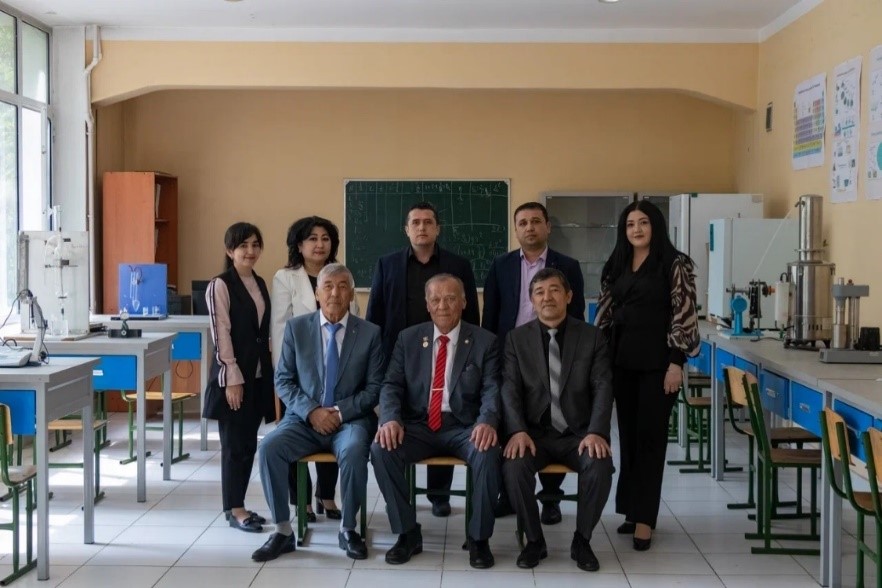
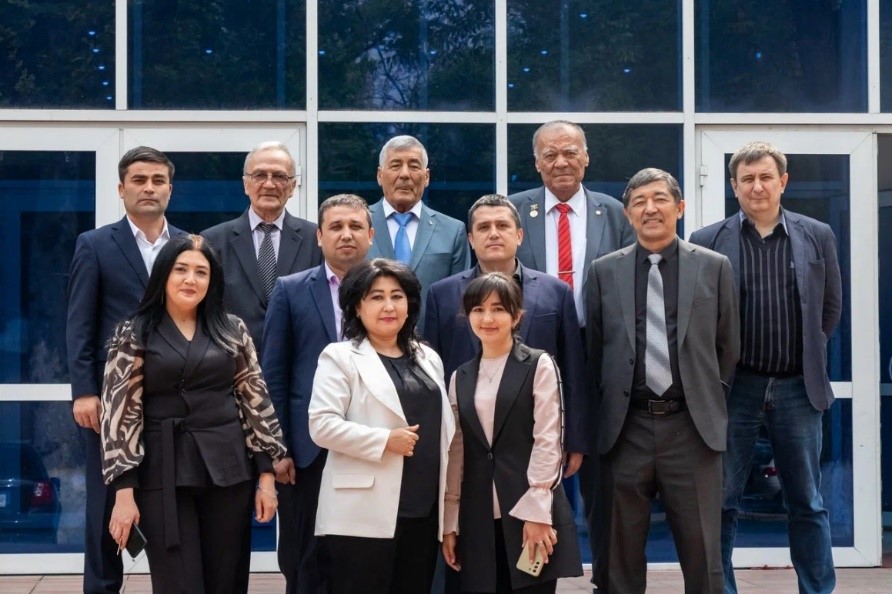
Today, the department employs associate professor A.A.Nasirov (head of the department), Professor Sh.U.Yuldashev, Professor M.Sh.Isaev, associate professors P.B. Parchinsky, M.A.Karabayeva, Zh.M. Khakkulov, teachers Z.Temirov, A. Arslanov..
In 1994, on the initiative of Academician S. Rashidova, the Department of Polymer Physics was established. In December 2011, the Department of Physics of Semiconductors and Dielectrics and the Department of Physics of Polymers were merged into the Department of Physics of Semiconductors and Polymers. The joint department was headed by Prof. Vlasov S.I. In 2012-2017, the department was headed by Associate Professor D.E. Nazirov, from 2017 to 2019, the department was headed by Associate Professor A.A. Nasirov for a year, in 2019-2022, the department was headed by Professor A.A. Kholmuminov. Since 2022, Associate Professor A.A. Nasirov has been the head of the department. During the functioning of the department, significant scientific schools have been formed at it, representatives of which have prepared and defended more than 30 doctoral and more than 100 candidate’s theses. Today, the department employs associate professor A.A.Nasirov (head of the department), Professor Sh.U.Yuldashev, Professor M.Sh.Isaev, associate professors P.B. Parchinsky, M.A.Karabayeva, Zh.M. Khakkulov, teachers Z.Temirov, A. Arslanov.
In 1994, on the initiative of Academician S. Rashidova, the Department of Polymer Physics was established. In December 2011, the Department of Physics of Semiconductors and Dielectrics and the Department of Physics of Polymers were merged into the Department of Physics of Semiconductors and Polymers. The joint department was headed by Prof. Vlasov S.I. In 2012-2017, the department was headed by Associate Professor D.E. Nazirov, from 2017 to 2019 the department was headed by Associate Professor A.A. Nasirov, in 2019-2022 the department was headed by Professor A.A. Kholmuminov. Since 2022, Associate Professor A.A. Nasirov has been the head of the department. During the functioning of the department, significant scientific schools have been formed at it, representatives of which have prepared and defended more than 30 doctoral and more than 100 candidate’s theses.
Today, the department employs associate professor A.A.Nasirov (head of the department), Professor Sh.U.Yuldashev, Professor M.Sh.Isaev, associate professors P.B. Parchinsky, M.A.Karabayeva, Zh.M. Khakkulov, teachers Z.Temirov, A. Arslanov..