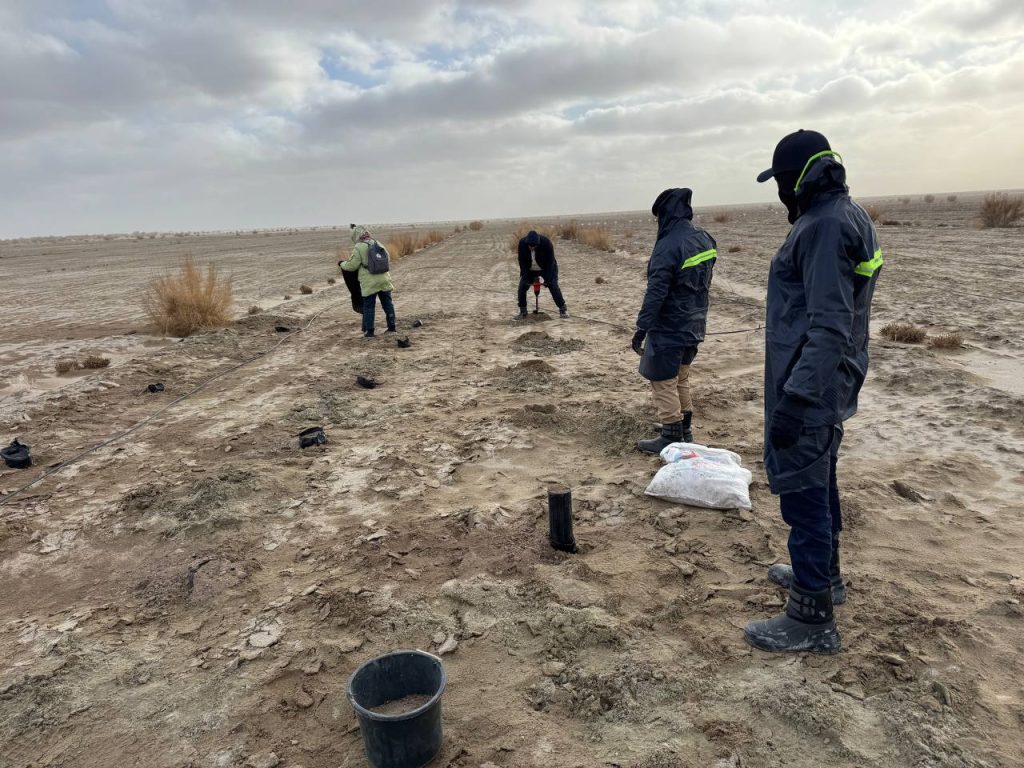
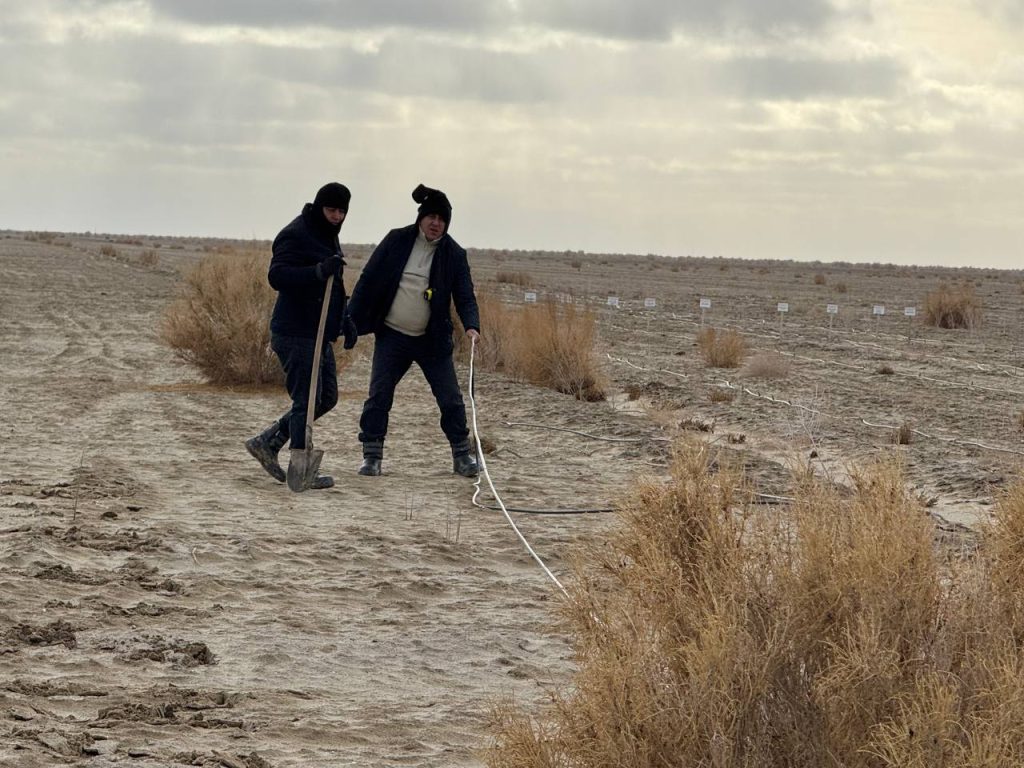
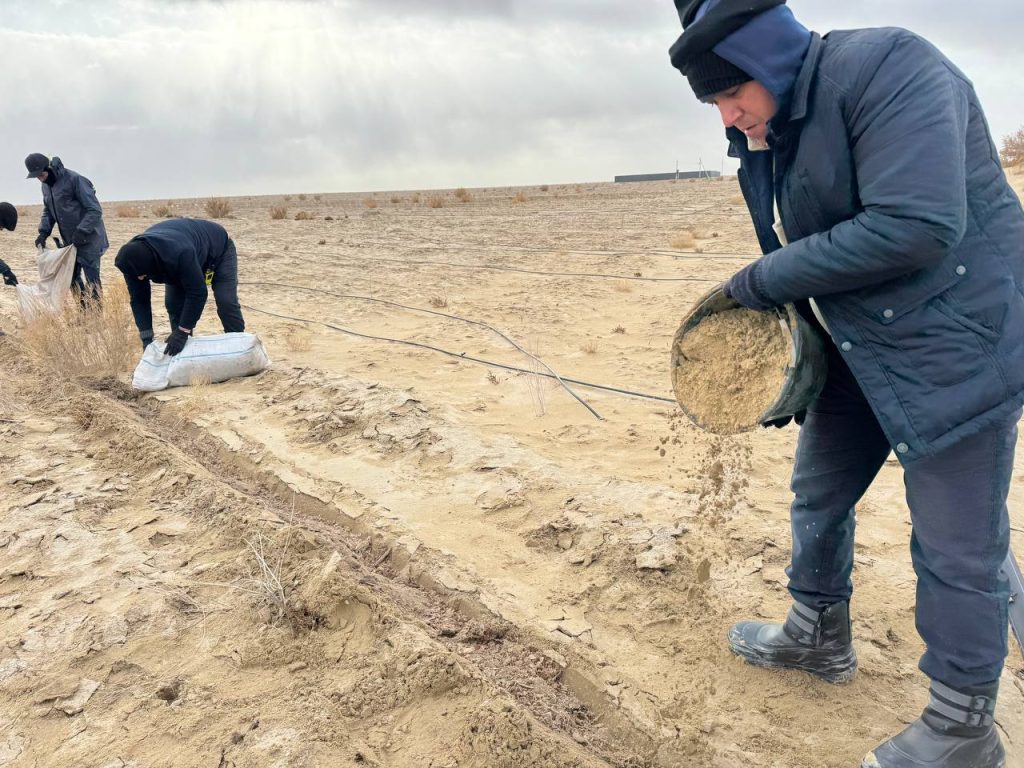
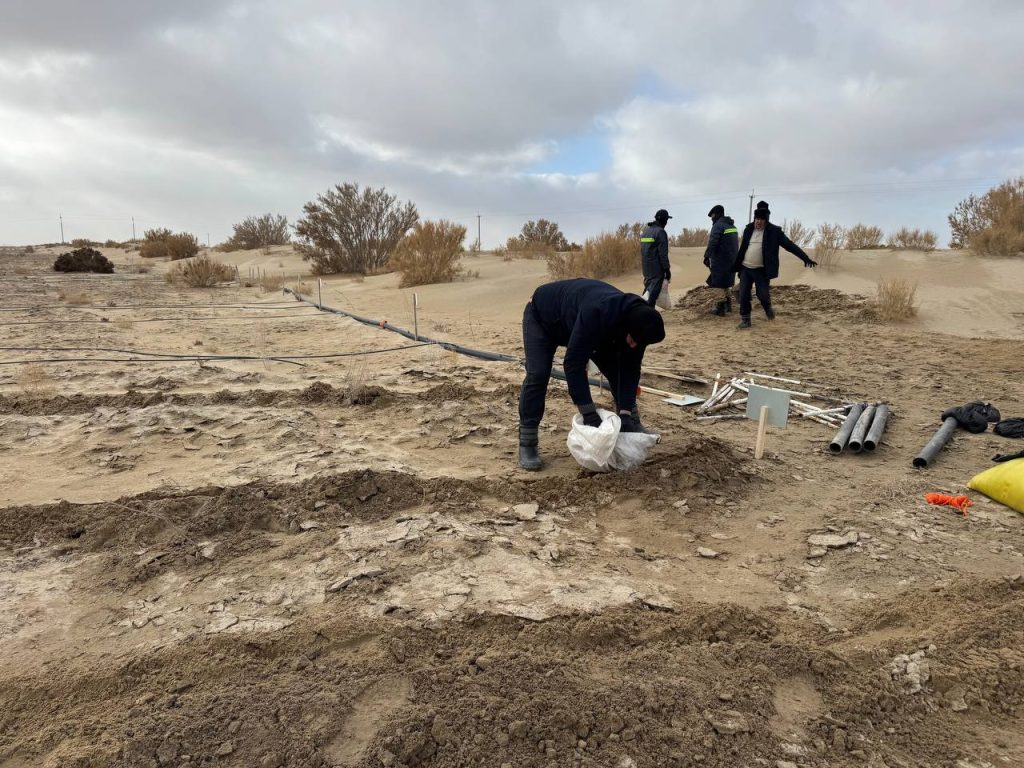
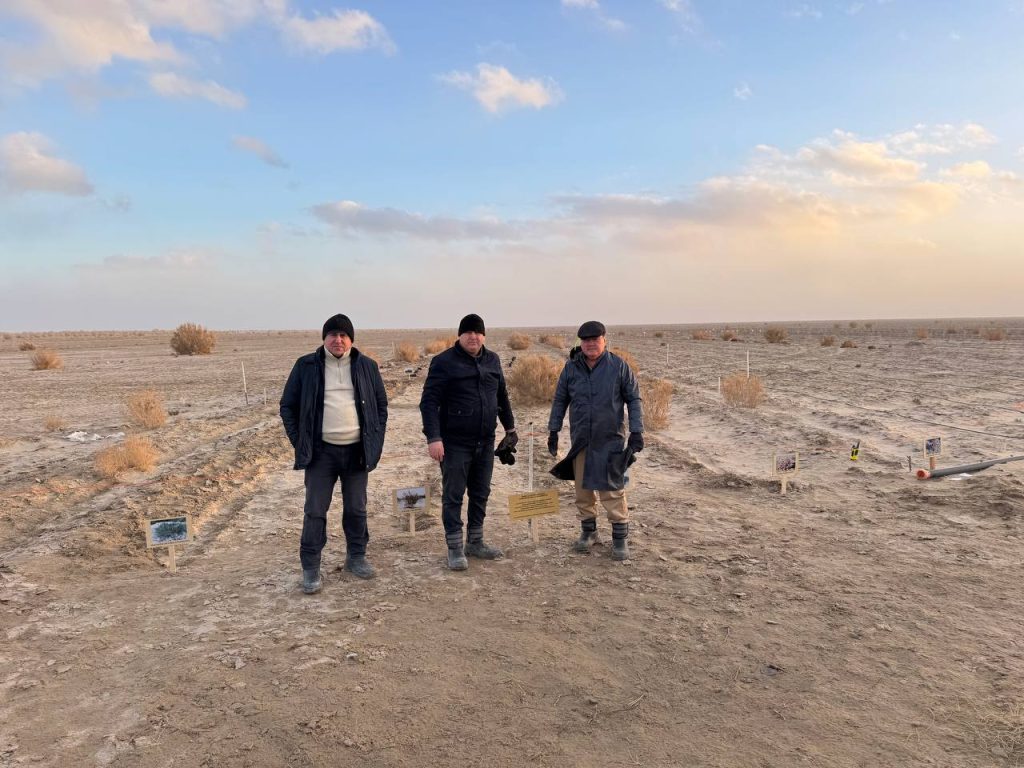
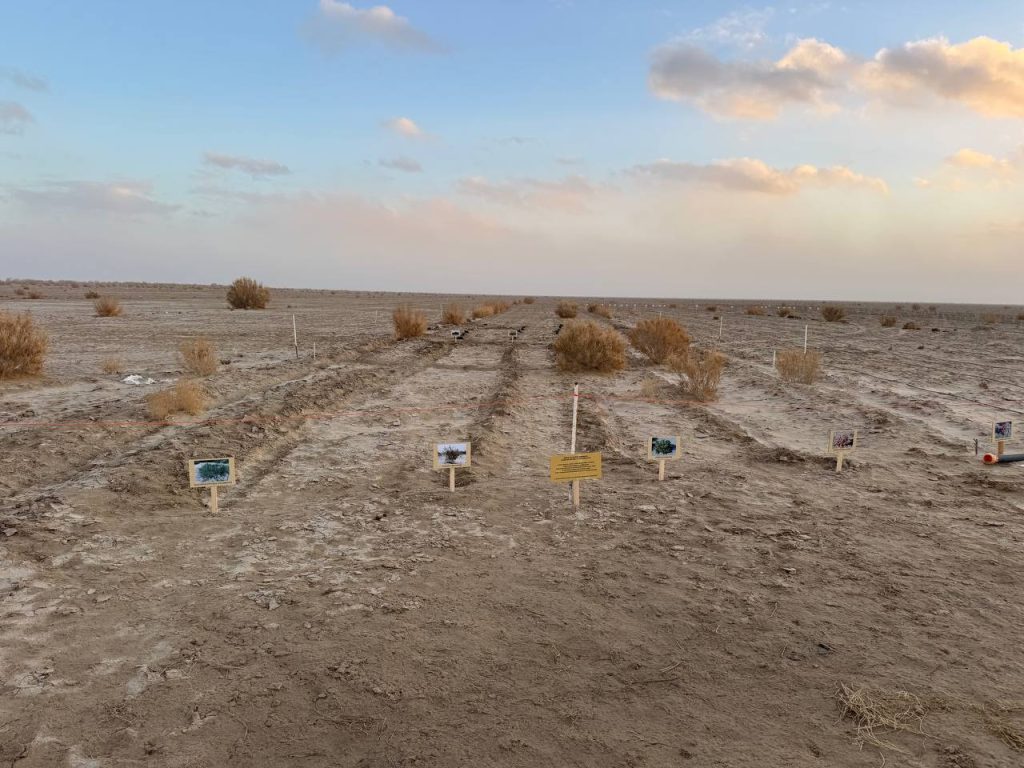
The team of the Faculty of Biology and Ecology of the National University of Uzbekistan carried out another scientific and practical expedition to create a green space on the dried-up bottom of the Aral Sea. Winter crops and various plant seeds were planted in these areas.
During the research, promising plant species with high viability, ability to adapt to saline and difficult natural conditions were selected, and their seeds are being tested on the dry bottom of the sea. This opens up new opportunities for the restoration of the Aral Sea region using biological methods.
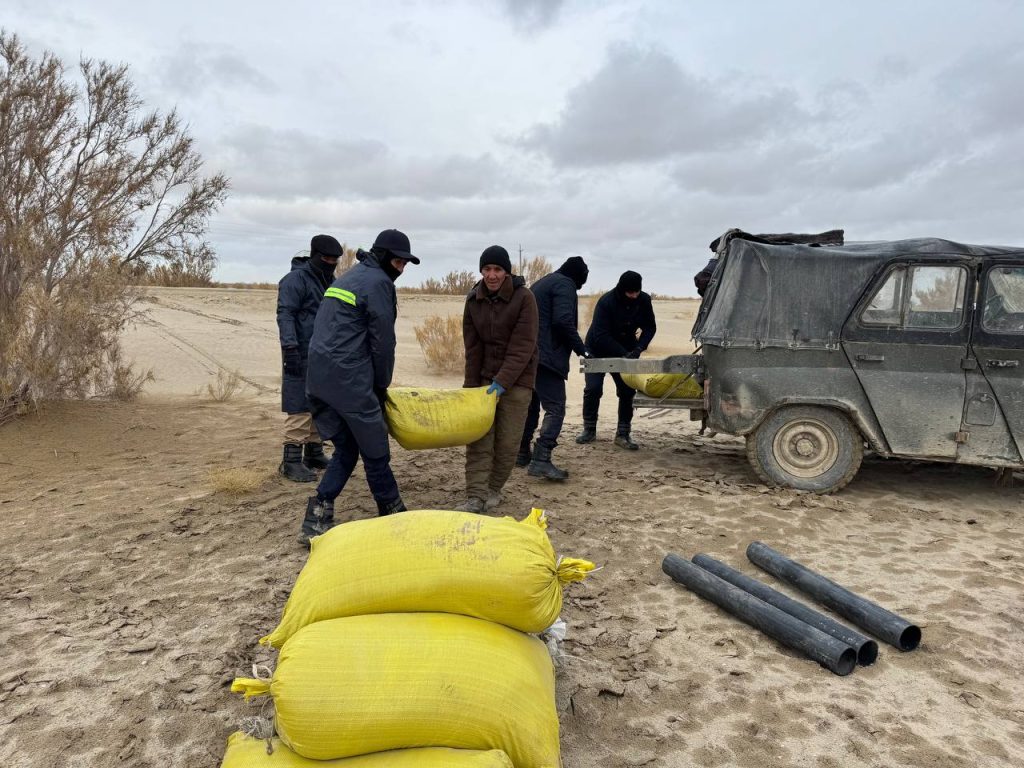
This approach can serve as an important scientific and practical basis for implementing large-scale greening work, combating dust and salt storms, as well as restoring the ecosystem of the entire region in the face of climate change and ecological degradation.
Scientists from the National University of Uzbekistan have proven in practice that planting a mixture of local trees, shrubs, and grasses that are resistant to drought and saline soil in the region can be very effective.