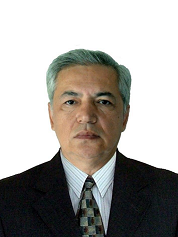
Director of the Institute of Biophysics and Biochemistry
Doctor of Biological Sciences, Academician Sabirov Ravshan Zairovich
- 100174, Tashkent city, Talabalar campus, Universitet Street, 174
- +99871-246-68-96
- +99871-246-63-09
- ibb-nuu@mail.ru
- ibb-nuu.uz
The Institute of Biophysics and Biochemistry at the National University of Uzbekistan named after
Mirzo Ulugbek was established by the Resolution of the Cabinet of Ministers No. 558 dated
July 19, 2018 “On the establishment of the Institute of Biophysics and Biochemistry at the
National University of Uzbekistan named after Mirzo Ulugbek.”
The Institute focuses on studying the biophysical and biochemical foundations of biological
processes in microorganisms, animals, plants, and humans, as well as on investigating the
mechanisms of action of biologically active substances at the cellular and molecular levels.
The Institute includes the following laboratories:
- Cell Biophysics
- Membrane Biophysics
- Molecular Biophysics
- Electrophysiology
- Molecular Physiology
- Metabolomics
- Genomics
- Evolutionary Biochemistry
Main tasks and research directions of the Institute:
- Conduct comprehensive research in biophysics and biochemistry, from fundamental studies to innovative technologies.
- Fundamental and applied studies in cell biophysics, including excitability, contractility, and mechanisms of cellular signaling, to clarify molecular and cellular mechanisms of heart and brain pathologies.
- Research in molecular biophysics of bioenergetic processes as the basis of normal physiology and various pathologies, including the endocrine system.
- Fundamental and applied studies of membrane processes in native and model membrane systems as targets for microorganism pathogenicity and pharmaceuticals.
- Investigations in molecular physiology of fundamental cellular processes involving ion channels and transporters, such as cell-volume regulation and intercellular signaling.
- Electrophysiological and biochemical studies on the effects of biologically active substances on cells and blood-coagulation systems.
- Fundamental metabolomics research to reveal the biochemical bases of endocrine and higher-nervous-system pathologies, and to explore their correction and drug-therapy methods.
- Molecular-genetic and population-genetic studies of mechanisms of human disease pathogenesis and their correction using genetic and pharmacological approaches.
- Fundamental evolutionary-biochemical research on biologically active proteins and other biomolecules as potential therapeutic agents for vascular and other diseases.
- Development of innovative solutions and products based on fundamental biophysical and biochemical findings to meet the needs of medicine, pharmacology, and other industries.
- Implementation of international projects, conferences, and seminars; integration into the global scientific community; and organization of internships for staff in leading laboratories worldwide.
- Training highly qualified scientific and academic personnel (PhD, DSc) and participating in the education of undergraduate and graduate students.