The Department of Sociology was established based on the decision of the Scientific Council of Tashkent State University dated May 25, 1989, and its activities were organized on the basis of the Faculty of Philosophy and Economics. On August 27 of the same year, the rector of the university signed the relevant order establishing and organizing the department’s activities.
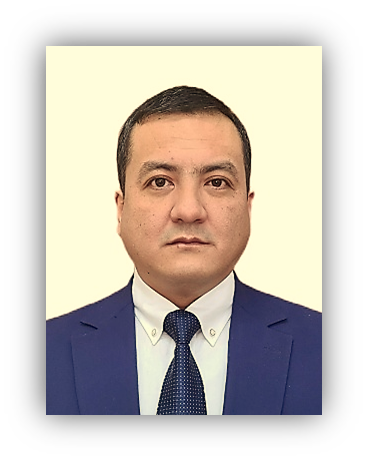
A number of distinguished scholars played an important role in the formation and development of the department. Initially, Associate Professor S.I. Nikolayev served as the head of the department. Later, under the leadership of A. Khaydarov and Professor N.S. Alikariev, the department’s activities reached a new level. Over different years, the department was also headed by B.A. Farfiev, M.Kh. Ganieva, N.M. Latipova, and K.K. Kalanov. Currently, the department is headed by E.Kh. Zaitov.
Scientific development and traditions
After Uzbekistan gained independence, attention to sociology increased significantly. Since 1998, sociology has been taught as a compulsory subject in higher education institutions.
One of the key stages in the development of the department is closely connected with the activities of the “Public Opinion” Center. This center, led by Academician R.A. Ubaydullaeva, became a major scientific institution specializing in the study of public opinion at the national level. More than 650 sociological studies have been conducted by the center.
This scientific school also played an important role in the formation of the Sociologists’ Association of Uzbekistan.
Scientific and teaching-methodological activities
The department’s faculty has carried out significant work in scientific and teaching-methodological areas. In particular:
- the first Uzbek-language textbook “General Sociology” was developed;
- a scientific school of sociological research was formed;
- modern sociological methods were introduced into practice.
Over different years, the following structures were established at the department:
- a sociology laboratory;
- a research center;
- educational laboratories, all of which contribute to the development of the educational and scientific process.
Human resource development
Since its establishment, the department has trained:
- more than 1,200 bachelor’s graduates;
- more than 100 master’s graduates.
In the field of scientific personnel training:
- 9 Doctors of Science have been trained;
- more than 15 PhD holders have been produced.
These results demonstrate the high scientific potential and well-established academic school of the department.
Scientific school and professional development
The department’s faculty systematically works on the development of sociology and training of academic staff. Within special programs:
- professional development courses are organized for university teachers;
- theoretical and practical classes on modern sociological directions are conducted.
Currently, the faculty members of the department continue to regularly improve their qualifications.
Modern approach and perspectives
Today, sociology plays an important role in analyzing and managing social development. It is a key tool for scientifically studying social processes, analyzing public opinion, and making strategic decisions.
The department’s activities are developing based on modern scientific approaches, innovative methods, and international experience.