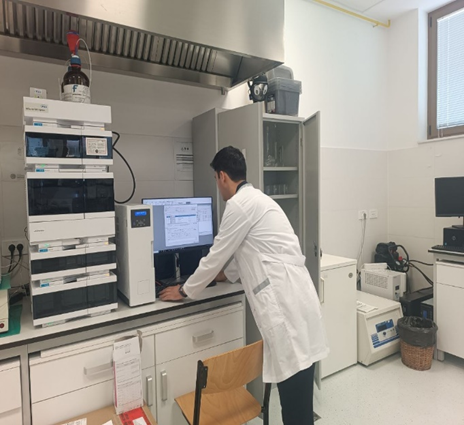
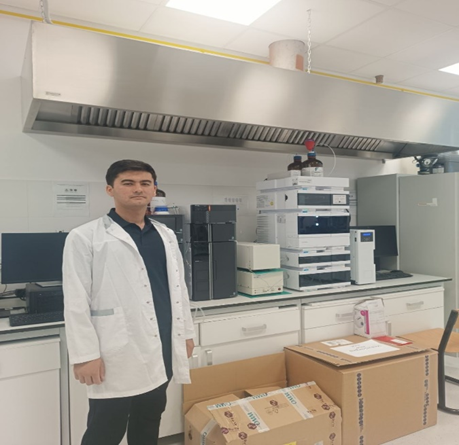
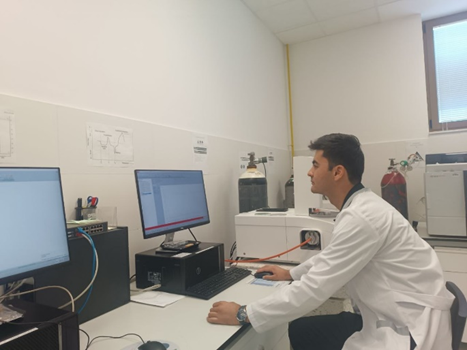
The Department of Chemistry of Natural Compounds was established in 1946 by the initiative of Doctor of Chemical Sciences O.Sadikov. In 1956, the scientific laboratory of problems of the chemistry of natural compounds was established under the department in order to study the flora more widely.
In 1946-1972, the department was held by Acad. Obid Sodikovych Sodikov; In 1972-1980 – prof. O.S. Otroshenko; In 1981-1985 and 1988-1992 – prof. H. Aslanov; In 1985-1988 – Assoc. T.K. Yunusov; In 1992-1998 – prof. S. A. Auelbekov; In 1998-2004 – Acad. SH.I. Salikhov; In 2004-2005 – prof. A.O. Sodikov; In 2005-2012 – prof. D.N. Dalimov; In 2012-2013 – Assoc. A.K. Khaitboev; Assoc. in 2013-2019. It was managed by S.A. Maulyanov, from 2019 until now it is managed by Prof. Boboev B.N.
Currently, the department teaches 10 subjects in the fields of 5140500-Chemistry (bachelor) and 5141800-Chemistry of natural physiologically active compounds, and 8 subjects in the master’s specialties 5A140501-Chemistry (Bioorganic Chemistry), 5A140502-Radiochemistry. Prof. Boboev B.N., Prof. Dalimova G.N., Assoc. KhamidovaG.R., Assoc. Maulyanov S.A. Prof. Sh.Ya. Mirzaakhmedov, Prof. A.G. Eshimbetov, as well as the employees of the Institutes of the Faculty of Arts of the Republic of Uzbekistan, Prof. Sh. Khojaev S., Yuldashev Kh., PhD Yormatov B., Berdiev N. and young teachers PhD Eshbekov A., doctoral students Sarabekov A., Mustafaeva D., masters Baikhanova N., Siddikova S. are also actively working .
The monograph “Chemistry, biology and physiological properties of plants belonging to the genus Lagochilus” and a number of methodological manuals were published for undergraduate education from the departments of the department, the textbook “Introduction to the chemistry of carbohydrates and lipids” was published. permission to print. For the new academic year, the “Bioorganic Chemistry” textbook and the “Chemistry Teaching Methodology” textbooks will be created. Students of undergraduate education and master’s specialty are provided with new generation study guides.
The scientific direction of the department is dedicated to the research of medicinal plants growing in Uzbekistan, the isolation of biologically active compounds from them, their modification and the study of their biological activity. is being conducted. As a result of recent scientific research, Inebrin drug was approved for use in medical practice by the Pharmacological Committee of the UzR SSV as an anti-allergic and blood-stopping agent.
Taking into account the relevance of the scientific direction of the department and in connection with the 75th anniversary of the establishment of the department, on May 27, 2021, a Republican scientific-practical conference was held on the topic “Development and future of the chemistry of natural compounds in Uzbekistan” with the participation of foreign scientists.
During the years of independence, 18 candidates of science (PhD) and 10 doctors of science (DSc) were trained under the leadership of professors and teachers of the department.
In recent years, the department has completed the following scientific projects: OT-A-10-2 – Development of a technology for the creation and production of anti-skin cancer drugs based on certain alkaloids (scientific leader S.A. Maulyanov)
YOA-11-3 – development of new effective means with antioxidant properties based on local raw materials. (scientific leader Berdiev N.)
YOA-11-4 – Development of hemostatic collagen film production technology based on local raw materials (scientific leader Sheribetov S.G.)
PZ-2017102419 – Development of methods for obtaining potassium, magnesium, iron salts of pectin (scientific leader Eshbekov A.E.)
OT-F7-61 “New derivatives of heterocyclic compounds; synthesis, structure and biological properties” (supervisor Boboev B.N.)
We are currently working to establish cooperation with foreign organizations, in particular, the Surgut State University of Russia, the Kazakh National University named after Al Farabi, and the Xinjiang Institute of Physics and Technology of the People’s Republic of China, where several graduates of our department are currently studying for a master’s degree, and the Shanghai Institute of Materials and Medicine. relations with institutions are being established.
Natural compounds and applied chemistry
Head of the department

TOSHOV HAMZA SAYIDMURODOVICH
Head of Department
Degree:
Candidate of Sciences, PhD
Scientific title:
Associate Professor
Reception days:
Address:
Address: 100174, Tashkent city, Almazor district, University street, 4th house
History of the department
The composition of the department


Scientific activity
The Department of Natural Compounds and Applied Chemistry is engaged in the isolation of natural biologically active compounds from plants growing in Uzbekistan, their In Silico analysis, quantum-chemical calculations, structural investigation, modification, study of mechanisms of action, and the development of pharmaceuticals for medicine and agriculture. In addition, the department consistently conducts research on chromatographic analysis methods, physical research techniques, and targeted synthesis through computer modeling in chemistry.
The results of the scientific research carried out by the department’s professors and teachers in recent years have been published in prestigious international scientific journals:
- Khaitbaev A.K.,Toshov H.S,Enriko Benassi. Relationship between structural properties and biological activity of (-)-menthol and some menthyl esters. Computational Biology and Chemistry. Volume 115, April 2025, 108357. https://doi.org/10.1016/j.compbiolchem.2025.108357
- Ganiyeva I., Khaitbaev A.K., Hudoynazarov I.A. Shokirov M.
Jalilov M., Yuldashev I. In silico Anti-Inflammatory Potential, ADMET Pharmacokinetics and Isolation of 1,8-Cineole from Rosmarinus officinalis // December 2025Biomedical & Pharmacology Journal 4(18):3186. DOI:https://dx.doi.org/10.13005/bpj/3327 - Dilshod Mansurov, Nozima Khabibullaeva, Alisher Khaitbaev, Ziyovuddin Khakimov, Alisher Rakhmanov, Elvira Vidović,Enrico Benassi. Bioactive composite based on chitosan obtained from the exoskeleton of dead Apis mellifera and selenium nanoparticles for accelerated skin wound healing: Synthesis, characterisation and in vivo assessment // International Journal of Biological Macromolecules. Volume 331, Part 2, November 2025, 148334 https://doi.org/10.1016/j.ijbiomac.2025.148334
- A.M. Asrorov, K.A. Ubaydullaeva, M.S. Ayubov, A. N. Abdullaev, Z. Bashirkhonov, S.A. Abdullaev, A. A. Bolkiev, F.I. Babadjanova, N. Mukhamedov, I.A. Hudoynazarov, K. Kuldoshova, B. Abdusattarov, Z. T. Buriev Salicylic acid in cotton plant resistance to biotic and abiotic factors. Plant Breeding and Biotechnology. 2025 .13.265~275 pp. https://doi.org/10.9787/PBB.2025.13.265
- M. Mirzaevaa, B. Iriskulova, A. M. Asrorov, I.A. Hudoynazarov, M.
Norbekova, R. Tadjibayeva, A. Mirzaev Association of Obesity with Premenopausal Breast Cancer: Analyzing Molecular Subtypes. Arch Breast Cancer. 2025; Vol. 12, No. 4: 481-493 pp. http://dx.doi.org/10.32768/abc.2022512-144 - N. Madusmanova, Z. Smanova, Z. Yakhshieva, A. Yangibayev,
I. Hudoynazarov, Sh. Yangibayev, O. Ahmadjonov,
Khamidova G., B. Babaev, Enrico Benassi; Determination of Mn(II) ions in soil samples by means of a sensitive sorption-spectroscopic method. Talanta. Volume 297, Part B, 1 January 2026, 128770 https://doi.org/10.1016/j.talanta.2025.128770. - Shakirzyanova G., Izotova L., Eshimbetov A., Kholbekov O., Babaev B., Togaev U., Ibragimov B. Synthesis and structural investigation of new derivate of 5-mercapto-3-phenyl-1,3,4-thiadiazol-2-thione // New materials, compounds and applications. 2025. Vol.9. No.3. p.585-600 Https://doi.org/10.62476/nmca.93585 Q4
- Turageldiev Sh., Jololiddinov F., Babaev B. Synthesis, antibacterial, and antioxidant activity of novel 1,3,4-thiadiazole derivatives // The Austrian Journal of Technical and Natural Sciences. 2025. No 11 – 12. P.57-62
- Tashpulatov Y.Sh., Sarabekov A.T., Khasanov N.S., Valiyev Sh.A., Khujanov A.N. Chemical composition of Helichrysum maracandicum popov ex kirp. in the condition in vitro cultivated // E3S Web of Conferences 538, 03018 (2024). IPFA 2024. P. 1-9.
- Sarabekov A.T. Helichrysum maracandicum, Helichrysum nuratavicum va Helichrysum mussae oʻsimliklarining kimyoviy tadqiqi. Monografiya. “FER-TEACH” MCHJ. Toshkent-2025. –B. 138.
- Toshov H.S., Anvarbekova V.A., Jalilov M.K., To’laganova F., Siddiqova S. Gossipolning 2,5-dimerkapto-1,3,4-tiadiazolni etilendiaminli kompleksi bilan shiff asosi va Ni2+ metall tuzi bilan metall kompleksining molekulyar dokinggi // Development of science Journal.- Fevral 2026. Vol. 5(2). p. 38-43.
- Хаитбаев А.Х., Тошов Х.С. Госсипол и его производные. Монография. ООО «РУСАЙНС», ISBN 978-5-466-07402-4. Москва 2026. 130-c.
- M.E.Ziyadullaev, Sh.Sh.Tursunov, A.B.Parmanov, S.E.Nurmanov, J.U.Abdullaev, S.S.Abduraxmanova, Kh.S.Toshov, F.J.Abduxaliqov, G.S.Khudiyarova, Kh.B. Musaev // Efficient synthesis of N-phenylbenzamides via amidation of vinyl esters of aromatic carboxylic acids with aniline // Chemical problems. -2025.
- Goyibnazarov I., Yarmatov S., Kholturayev B., Eshchanov K., Khasanova F., Sapaev I., Yuldoshov Sh, Sarymsakov A., Toshov K. Physico-chemical Properties of Silk Sericin Extracted by Hydrothermal Treatment //The Protein Journal. Volume 45, pages 409–421. 2026.
- M.E. Ziyadullaev, Sh.Sh. Tursunov, A.B. Parmanov, S.E. Nurmanov, J.U. Abdullaev, S.S. Abduraxmanova, Kh.S. Toshov, F.J. Abduxaliqov, G.S. Khudiyarova, Kh.B. Musaev. Efficient synthesis of n-phenylbenzamides via amidation of vinyl esters of aromatic carboxylic acids with aniline. Chemical Problems; 2026; V. 24(4); p. 591-598
- Umarbek Matchanov, Khulkar Saydullaeva, Rakhmat Esanov, Fotima Sobirova, Bobur Raxmonov, Quzijon Baratov, Nigora Tagayalieva, Alimjan Matchanov, Alisher Eshimbetov, Togaev Ulugbek. PREPARATION AND BIOLOGICAL ACTIVITY OF MOLECULAR COMPLEXES BASED ON SECONDARY METABOLITES OF Glycyrrhiza glabra L. AND Sophora japonica L. New Materials, Compounds and Applications. ISSN: 25217194. Volume:10. Issue: 1. Pages: 121 – 137.
International cooperation
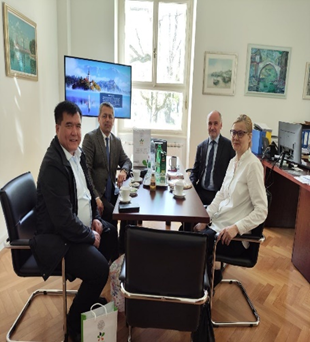
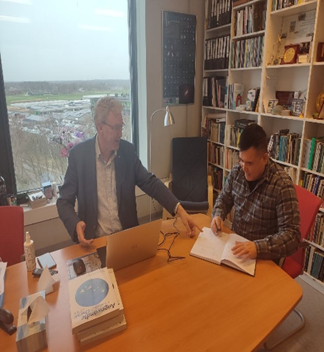
Today, the professors and academic staff of the Department maintain close scientific cooperation with leading higher educational institutions around the world. In particular, a memorandum was signed between the Faculty of Chemistry of the National University of Uzbekistan and the Faculty of Chemical Engineering and Technology of the University of Zagreb (Croatia). (At the University of Zagreb, the second-year doctoral student of the Department, Khabibullaeva Nozima Fazliddin qizi, conducted scientific research from 11.09.2022 to 09.11.2022). In addition, memorandums were signed with the University of Zaragoza (Spain), the University of Delhi (India), Wageningen University (the Netherlands), and the Faculty of Chemical Engineering and Technology of the University of Zagreb (Croatia). (Senior Lecturer of the Department, Togaev Ulugbek Rakhmonqulovich, conducted scientific research at the University of Zaragoza from 09.09.2022 to 01.12.2022, and at the University of Delhi in May 2022. Associate Professor Khudoynazarov Ilyos Abdurasulovich conducted scientific research at Wageningen University in the Netherlands from 02.12.2022 to 28.02.2023, and at the University of Zagreb from 06.04.2025 to 12.04.2025).
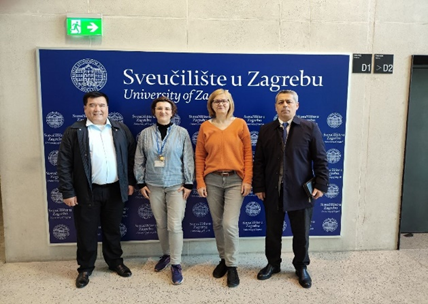
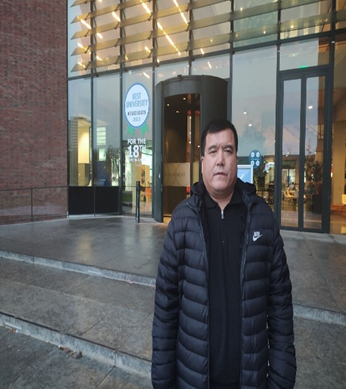
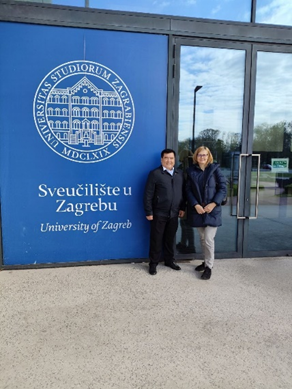
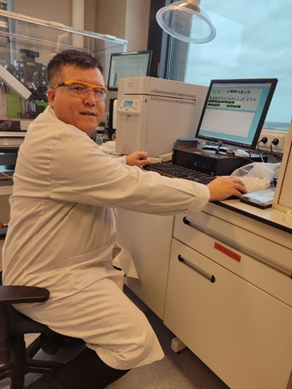
The Department of Natural Compounds and Applied Chemistry has engaged five professors from higher educational institutions ranked among the world’s top 1000 universities, who have been sharing their knowledge with graduating students. In particular, Professor Ante Jukic (h-index 15) and Professor Elvira Vidovic (h-index 10) from the Faculty of Chemical Engineering and Technology of the University of Zagreb, Croatia (ranked 801st in the QS ranking and 529th in the THE ranking), were invited to deliver lectures on a voluntary basis (12 hours) within the framework of independent education hours in the subjects “Physical Research Methods” and “Chromatographic Analysis Methods” for 4th-year (Russian-language) Chemistry students from September 4, 2023, to November 25, 2023. Associate Professor Aleksandr Buzaev Aleksandrovich (h-index 6) from Tomsk State University of the Russian Federation (ranked 431st in the QS ranking and 326th in the THE ranking) was invited to deliver lectures on a voluntary basis (12 hours) within the framework of independent education hours in the subject “Computer Modeling in Chemistry” for 4th-year students of the “Chemical Analysis of Products” program from October 4, 2024, to December 25, 2024. Professor Enrico Benassi (h-index 21) from the University of Modena, Italy (ranked 641st in the QS ranking and 421st in the THE ranking), was invited to deliver lectures on a voluntary basis (12 hours) within the framework of independent education hours in the subject “Computer Modeling in Chemistry” for 3rd-year (Uzbek- and Russian-language) students of Chemistry and Oil and Gas programs from March 1, 2024, to May 25, 2024.Professor Han Zuilhof (h-index 68) from Wageningen University, the Netherlands (ranked 151st in the QS ranking and 64th in the THE ranking), was invited to deliver lectures on a voluntary basis (12 hours) within the framework of independent education hours in the subject “Physical Research Methods” for 4th-year (Russian-language) Chemistry students from October 2, 2024, to December 26, 2024.
Professor Imshik Lee (h-index 20) from Nankai University, China (ranked 355th in the QS ranking and within the 251–300 range in the THE ranking), was invited to deliver lectures in both online and offline formats on a voluntary basis within the framework of 12 hours of independent education in the subject “Modern Computer Modeling Methods in Chemistry” for first-year master’s degree students (Chemistry specialization, evening program) from February 10, 2026, to April 30, 2026.
Professor Maria Da Conceição Branco Da Silva (h-index 35) from the Faculty of Pharmacy of the University of Porto, Portugal (ranked within the 301–350 range in the QS ranking and within the 401–500 range in the THE ranking), was invited to deliver lectures in both online and offline formats on a voluntary basis within the framework of 12 hours of independent education in the subject “Green and Sustainable Chemistry” for 3rd-year (Russian-language) Chemistry students from February 10, 2026, to April 30, 2026.
Today, specialized laboratories focused on targeted synthesis are operating within scientific laboratories affiliated with the world’s leading higher educational institutions and research institutes specializing in scientific fields (the Top-20 list is attached). In these laboratories, the biological activities of compounds are preliminarily studied, and clear research directions are determined for scientists engaged in synthesis and for researchers conducting the pharmacological evaluation of substances. However, it is necessary to investigate the relationship between the structure of a newly synthesized physiologically active substance and its biological activity. For this purpose, several stages of research should be carried out using the newly synthesized compound. Scientific centers such as “Fundamentals of Computational Modeling in Chemistry” contribute to determining the structure of substances and their biological activity without excessive consumption of reagents, while also reducing the long time required by researchers to study compounds and preventing unnecessary expenses associated with the practical implementation of such compounds.
At the Faculty of Chemistry, the subject “Computer Modeling in Chemistry” is taught for all bachelor’s degree programs and master’s specializations. Within the framework of this subject, in order to implement the above-mentioned research activities and to train bachelor’s and master’s students as competitive specialists capable of meeting the demands of the modern era, modern software packages as well as modern computers are required to ensure the completion of calculations performed in these programs.
Since 2021, negotiations have been conducted in collaboration with Professor Enrico Benassi (h-index 24) of the University of Modena, Italy, and by 2025,
1. Q2-Computational Biology and Chemistry (https://www.sciencedirect.com/journal/computational-biology-and-chemistry) (the journal publication fee amounted to USD 3,320, and this fee was paid by Professor Enrico Benassi).
2. Q1- One article was published in the Australian journal “Talanta” (Impact Factor: 6.1, Q1) (https://doi.org/10.1016/j.talanta.2025.128770)
3. Q1-One article was published in the Q1 journal “International Journal of Biological Macromolecules”.
https://www.sciencedirect.com/science/article/abs/pii/S0141813025088919
The publication fees for all of these articles were paid by Professor Enrico Benassi, resulting in an investment of nearly USD 11,000 for our university.
Currently, work on four additional articles is underway, and negotiations are ongoing regarding the organization of summer schools as well as the systematic training of bachelor’s and master’s students in this field.
At the Faculty of Chemistry, practical work is being carried out to establish a scientific center titled “Fundamentals of Computational Modeling in Chemistry,” which performs important calculations using the most advanced computer modeling software in chemistry (Professor Enrico Benassi has agreed to serve as the head of this center on a voluntary basis). Through this initiative, access to currently paid software programs is being made available.
GAUSSIAN (https://gaussian.com/wp-content/uploads/dl/us_com.pdf (Returned checks are subject to a service fee of $35.00),
SCIFINDER (In academic institutions, for example, the cost of SciFinder for a single university is approximately USD 150,000–200,000 per year or more- https://scholarspace.manoa.hawaii.edu/server/api/core/bitstreams/56c1a36b-0183-492f-ae5f-965739c9e3e4/content
REAXYS (For example, it has been reported that in the United Kingdom, the annual license for Reaxys at a higher education institution is approximately £38,000, which is equivalent to about USD 45,000–50,000- https://www.chemistryworld.com/news/access-to-chemical-database-reaxys-under-threat-in-uk-as-fees-spiral/4016275.article?utm_source),
QSAR-QSPR (Token store – ProtoPRED-£100 euro)
such initiatives provide an opportunity to enable free access to globally recognized software tools.
The Department’s master’s student, Maxammadshokirov Rakhimjon Zokirjon o‘g‘li, completed an internship at the Faculty of Chemical Engineering and Technology of the University of Zagreb (Croatia) from March 1, 2026, to May 1, 2026, within the framework of the “Academic Mobility” program funded by the Erasmus Foundation. During the internship, he conducted scientific research related to his master’s dissertation on the synthesis of phosphopolymeric maleic acid and the study of its physicochemical properties.
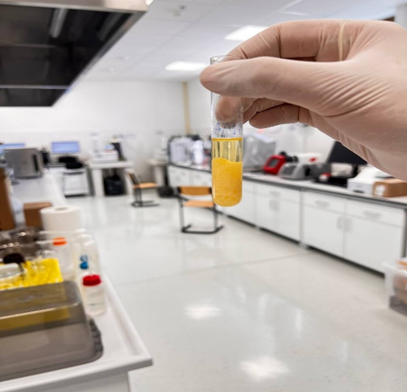
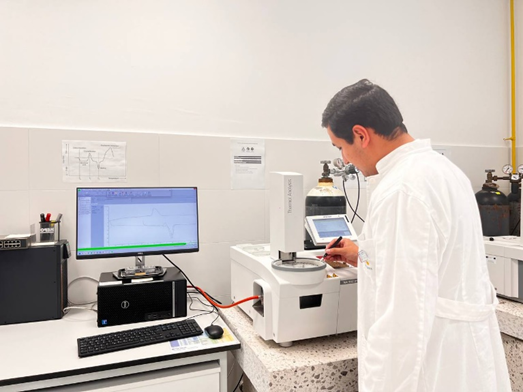
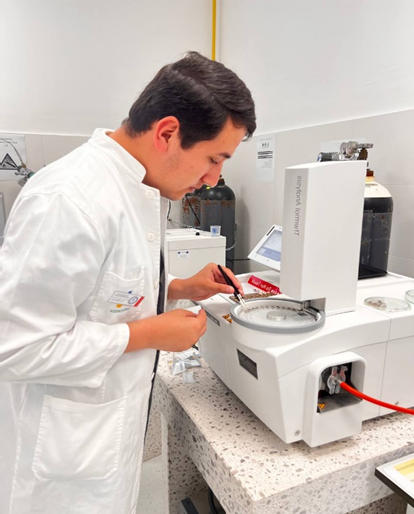
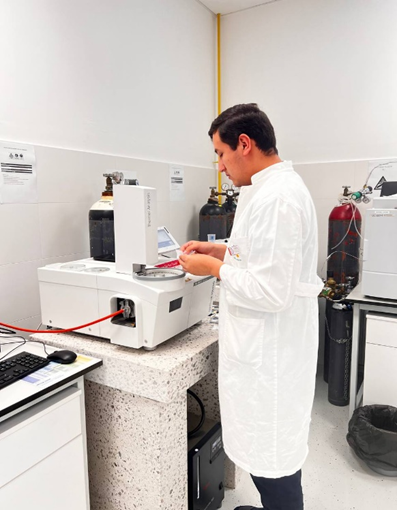
The Department’s second-stage basic doctoral student, Rahmonov Boburjon Dilshod o‘g‘li, completed an internship at the Institute of Chemistry of Kazan Federal University from March 14, 2026, to April 12, 2026. During the internship, he mastered advanced chromatographic and spectral analysis methods in a modern analytical chemistry laboratory. In particular, practical skills were developed in the comprehensive study of the chemical composition of plant raw materials, the qualitative and quantitative determination of biologically active compounds, and the assessment of their variation dynamics during the vegetation period. As the research object, fruits of Pyrus pyraster (wild pear) were selected, and various extracts (aqueous, hydroalcoholic, and organic solvent extracts) were obtained. The volatile components of these extracts were analyzed using gas chromatography–mass spectrometry (GC–MS), and the profiles of constituent compounds were identified. In addition, preparative separation of the extracts was performed, and individual fractions were obtained. Their composition was analyzed using high-performance liquid chromatography–mass spectrometry (HPLC–MS), and the presence and structural characteristics of polyphenols and other biologically active compounds were investigated. The obtained results provided important scientific information on the identification of biologically active compounds in Pyrus pyraster, their distribution, and chemical nature, and contributed to building solid practical experience in the application of modern analytical methods. At the end of the internship, certificates confirming successful completion of the program were awarded by the administration of Kazan Federal University and the Director of the Institute of Chemistry.
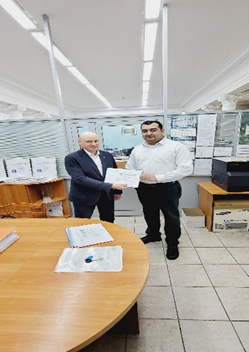
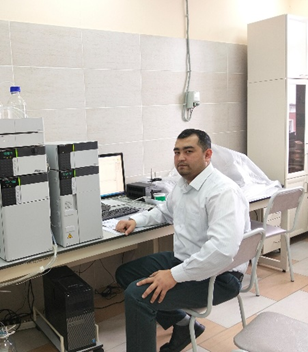
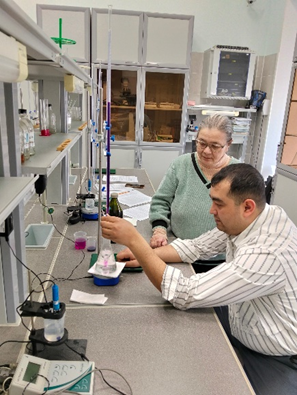
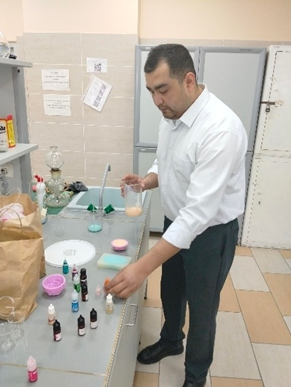
The Department’s third-stage basic doctoral student, Mansurov Dilshod Azizjon o‘g‘li, is currently undertaking a scientific internship at the Faculty of Chemical Engineering and Technology of the University of Zagreb (Croatia) from May 3, 2026, to July 3, 2026, within the framework of the Erasmus-funded “Academic Mobility” program. During the internship, it is planned to study the physicochemical and biological properties of compounds exhibiting phytoncidal activity isolated from certain plants collected in the mountainous regions of the Tashkent region, as well as their derivatives, using modern instrumental analytical methods. In particular, these compounds are being investigated by NMR spectroscopy, GC–MS/MS, IR spectroscopy, antibacterial activity assays, and other advanced analytical techniques in order to determine the relationship between their structure and biological activity. Joint scientific research has been conducted and international scientific experience has been exchanged within this framework.