Scientific activity
At the Department of Human and Animal Physiology, nearly 30 research projects within the framework of state and international programs, as well as economic contracts, have been successfully implemented to date.
Currently, fundamental research is being conducted in the following area: studying the physiological, biochemical, and molecular indicators of the organism under various normal and pathological conditions (including neurodegenerative diseases, hypothyroidism, autoimmune processes, diabetes mellitus, and other metabolic disorders), as well as developing scientific foundations for their correction using biologically active compounds.
Researchers at the department are engaged in studies related to:
- The role of adrenal glands in regulating the hydrolytic and transport functions of the small intestine.
- Mechanisms of digestive regulation in chronic experiments on animals.
- Development of hydrolytic systems in offspring depending on maternal thyroid status.
- Development of enzymatic systems in the initial and final stages of carbohydrate, protein, and lipid hydrolysis in sheep ontogenesis.
- Oral immunization.
- The effect of some pesticides on mitochondrial levels.
- Energy metabolism and oxidative stress correction in mitochondrial dysfunction in liver diseases (e.g., hepatitis).
- Physiological mechanisms of post-COVID-19 recovery.
- Biorhythms of functional indicators in the termite species Anacanthotermes ahngerianus jacobs.
- Inflammatory activity of new amides derived from 3-acetoxyglycyrrhetinic acid.
- Body composition and dietary behavior of adolescent girls.
The department has published:
- 50 textbooks and teaching materials
- 35 monographs
- Numerous articles in prestigious journals indexed in Scopus and Web of Science.
International Collaboration
International cooperation
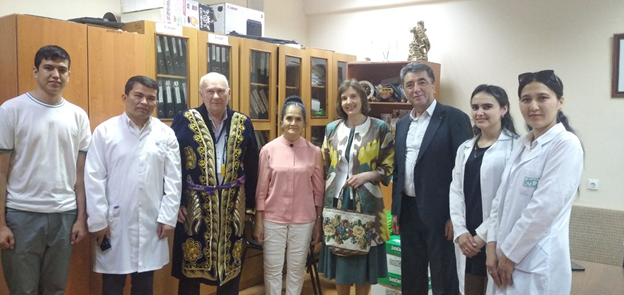
The Department of Human and Animal Physiology collaborates with scientists from various countries, including Russia, the USA, Poland, the Czech Republic, Belarus, India, China, Austria, Germany, Spain, South Korea, Turkey, Kazakhstan, and Tajikistan. Some key collaborations include:
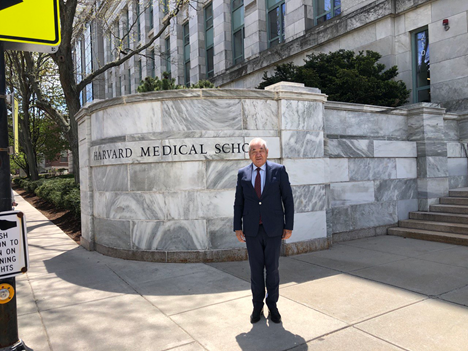
- Harvard and Florida Universities (USA)
- Sakharov International State Environmental Institute (Belarusian State University)
- Wageningen University (Netherlands)
- Czech University of Life Sciences (Czech Republic)
- Pavlov Institute of Physiology (Russia)
- Kyzylorda State University (Kazakhstan)
- Royal University of England (UK)
- Hexingen University (Germany)
Completed International Projects
- IL-4821091572 – “Fundamental Basis for Nutritional Correction of Thyroid Gland Autopathology and Its Complications in the Pancreas” (2022-2024), Belarus-Uzbekistan. Project Leader: Prof. L.S. Kuchkarova.
- A-OT-2021-380 – “Development of Peptide-Linked Biostimulants Used as Feed Additives for Cattle.” Project Leader: Assoc. Prof. B.A. Kaxarov.
Currently, scientists from the USA, Turkey, Belarus, and China are working on various research projects in collaboration with the department, with plans to secure grant funding.
Cooperation with US universities
The international cooperation established by the Faculty of Biology and Ecology of the National University of Uzbekistan with such prestigious higher education and scientific centers of the world as Harvard University and the University of Florida further strengthens the prestige and potential of our university in the international scientific arena.
Within the framework of these cooperation, professors, teachers, young researchers and students of the National University of Uzbekistan actively participate in international scientific projects, academic exchange programs, conferences and modern scientific research. In particular, cooperation in the areas of biology, physiology, global health and biomedicine demonstrates the international competitiveness of our university’s scientific school.
Such international relations serve as an important foundation for the development of the scientific potential of students of the National University of Uzbekistan, the study of foreign experience and their future occupation of a worthy place in the global scientific arena.

Cooperation with Belarusian universities
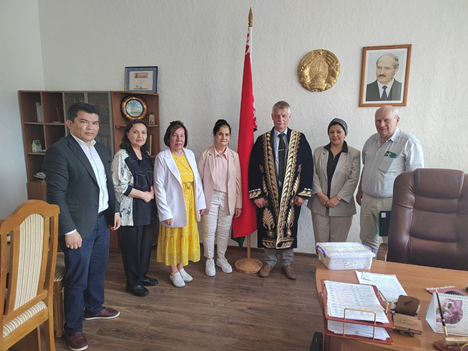
The National University of Uzbekistan has also established effective international cooperation with leading higher education and scientific centers of the Republic of Belarus. In particular, within the framework of scientific cooperation with the Sakharov International State Ecological Institute of Belarusian State University, the Belarus-Uzbek international scientific project No. IL-4821091572 on the topic “Fundamentals of nutritional correction of thyroid autopathology and its complications in the pancreas” was successfully implemented during 2022-2024.
This project is aimed at studying autoimmune thyroid diseases and their impact on the pancreas, as well as the fundamental mechanisms of alleviating pathological processes through nutritional correction, and is of significant scientific importance for modern physiology and biomedicine.
The scientific leader of the project is L.S. Kuchkarova, and this international cooperation once again demonstrated the activity and scientific potential of UzNU scientists in the international scientific arena