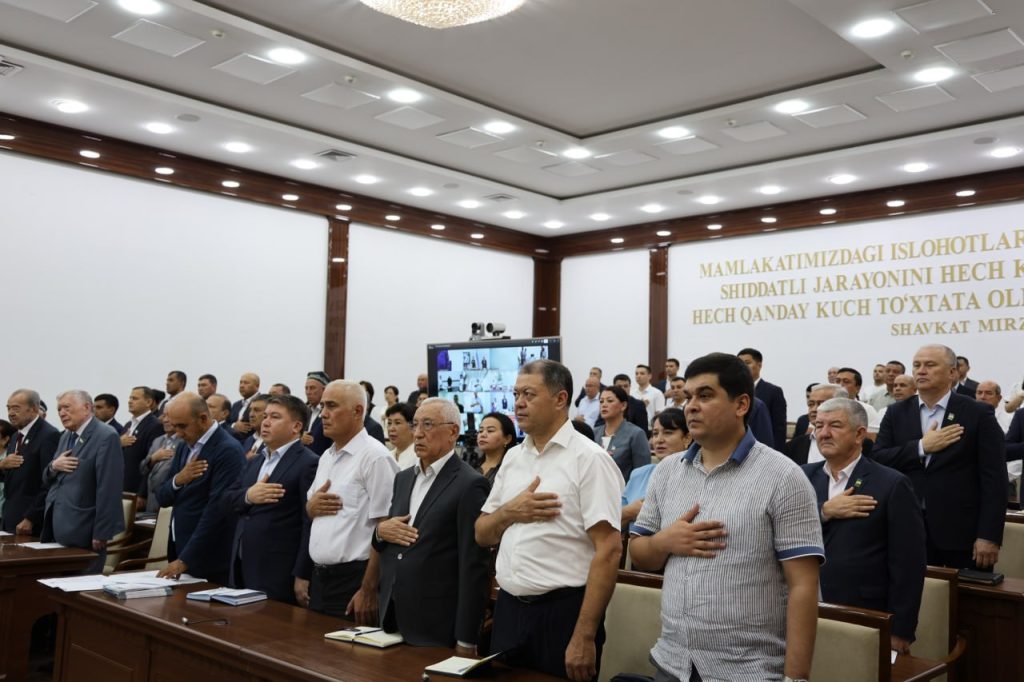
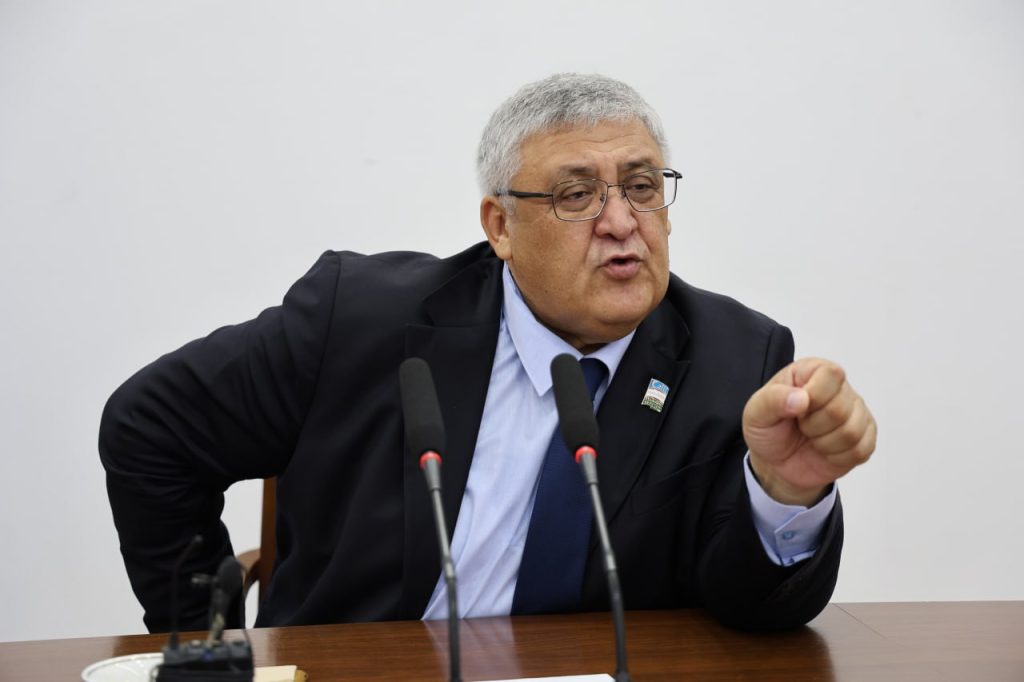
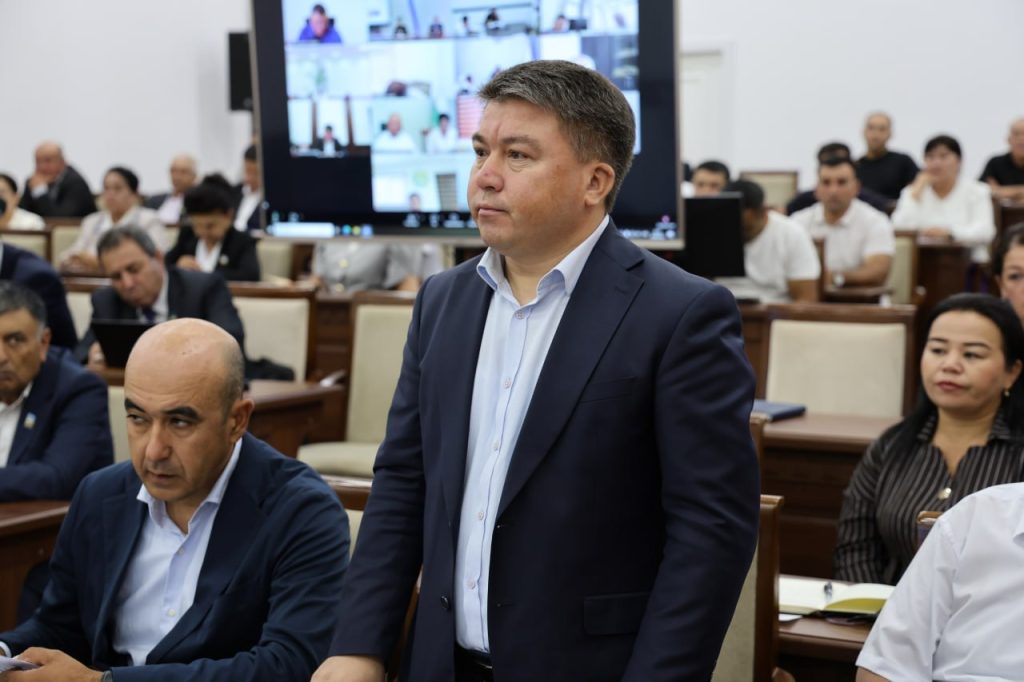
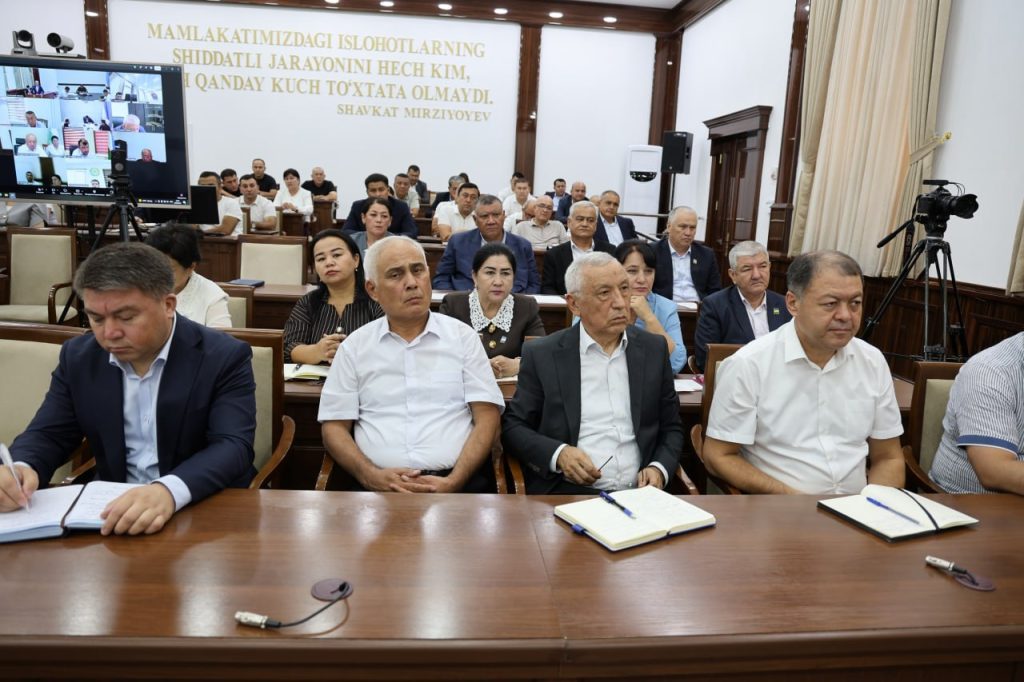
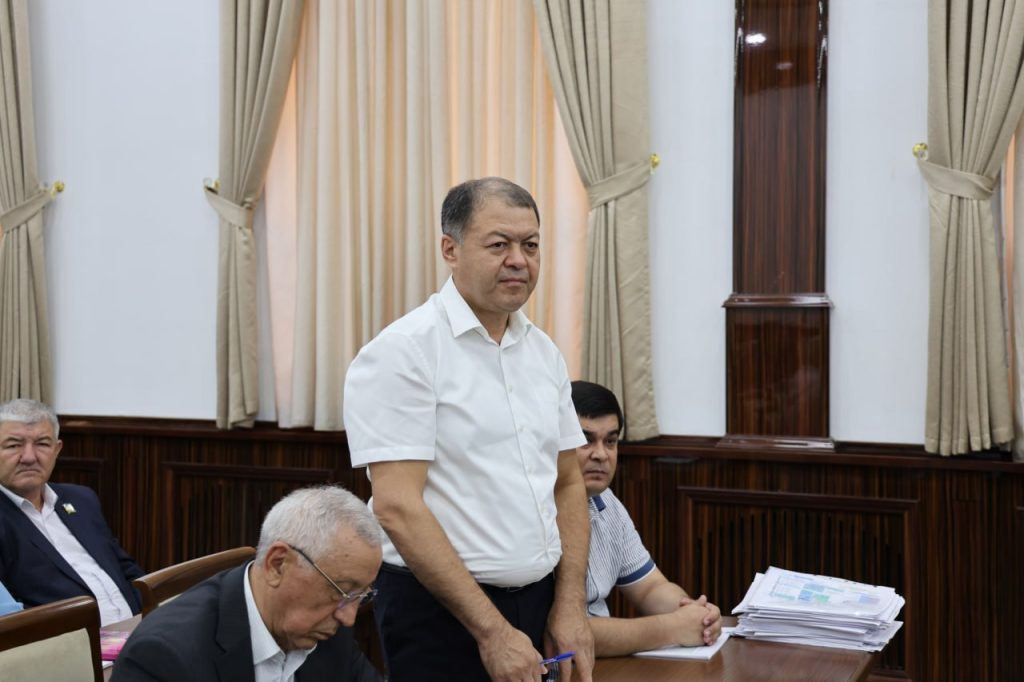
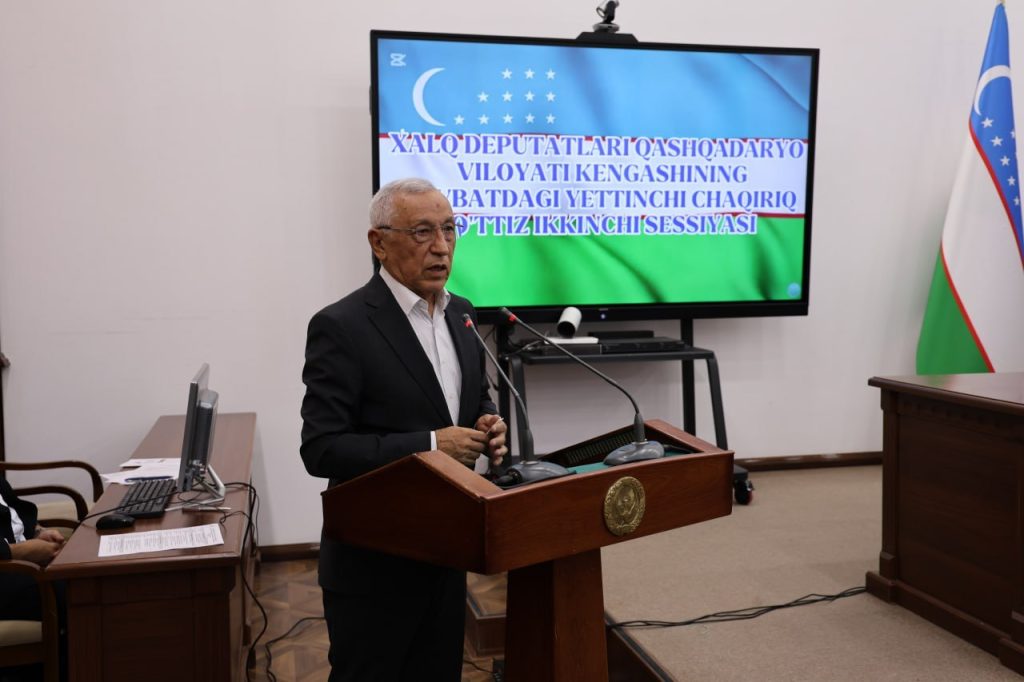
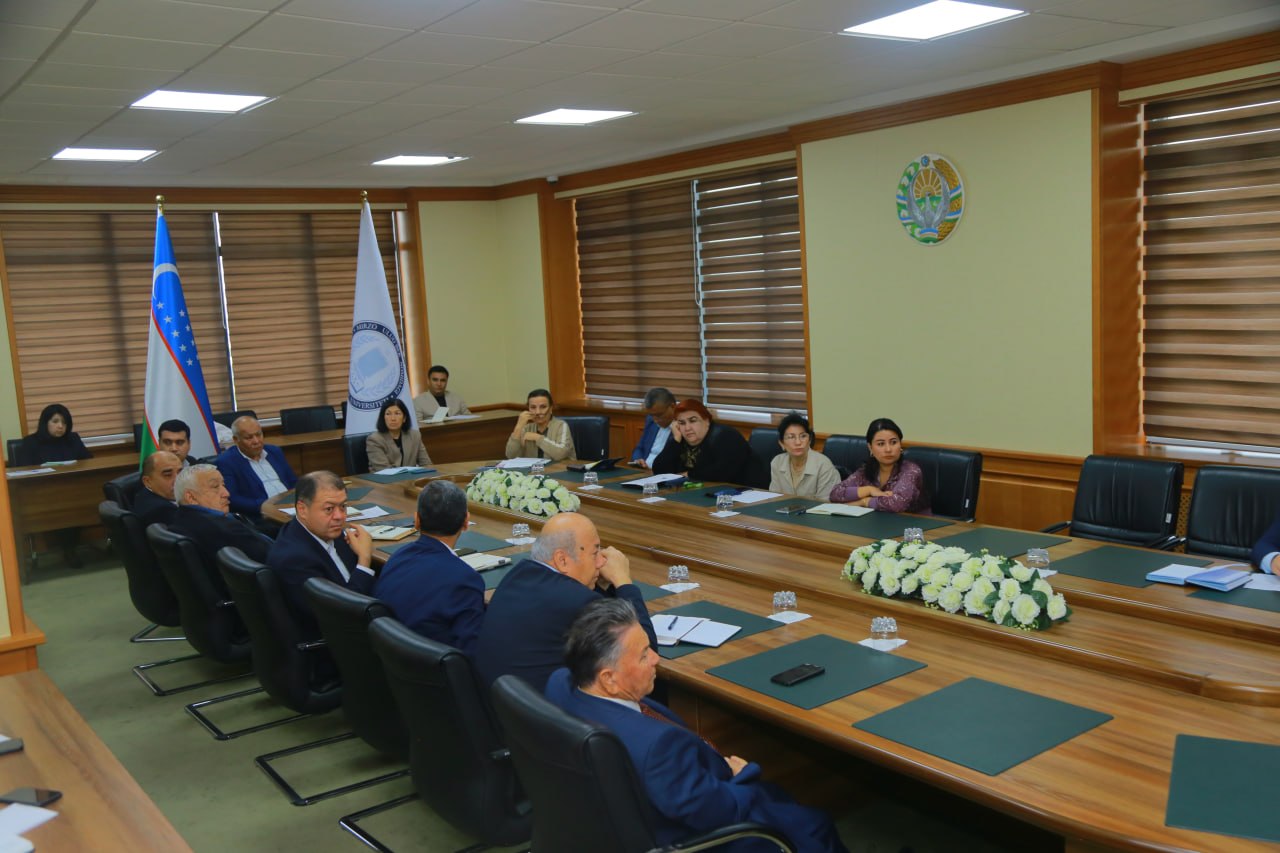
Today, the 32nd regular session of the Council of People’s Deputies of Kashkadarya Region was held. The session was attended by deputies, senators, heads of relevant organizations, representatives of the public, media professionals, as well as a working group led by Inom Madjidov, Rector of Mirzo Ulugbek National University of Uzbekistan. One of the key issues on the session’s agenda was the approval of the “Roadmaps” developed to mobilize additional reserves and opportunities in the cities and districts of Kashkadarya Region and to address systemic challenges.
This historic step represents the practical implementation of the instructions given by the President of the Republic of Uzbekistan during his visit to Namangan Region on June 23, 2026. At the initiative of the Head of State, a fundamentally new system based on a scientific approach to regional development has been introduced, with the country’s leading higher education institutions assigned to regions to develop scientific and practical solutions to local challenges.
Under this new system, Mirzo Ulugbek National University of Uzbekistan has been assigned to Kashkadarya Region as a “think tank” for permanent cooperation aimed at supporting the region’s development. To ensure the effective organization of the think tank’s activities in the region, a special task force has been established within the regional administration, while city and district mayors have been personally designated as responsible representatives for the implementation of the relevant work.
The O‘zMU working group, led by Rector Inom Madjidov, carried out extensive work to identify the existing potential and additional opportunities of Kashkadarya Region and its districts, as well as to develop, jointly with local administrations, scientifically grounded solutions to pressing challenges and optimal ways to address them. Based on the findings of this research, comprehensive “Roadmaps” consisting of 16 annexes were prepared, focusing on the development of the region’s potential in industry, agriculture, services and tourism. The Roadmaps were officially approved at the session. Their implementation will enable a significant increase in production and service volumes in the region’s districts and cities, create thousands of new jobs, and substantially increase local budget revenues.
By integrating scientific achievements and innovations directly into production chains, O‘zMU is becoming not only a center for training highly qualified specialists, but also a powerful practical driver of the economic development of the regions.